

The market for anti-aging and longevity supplements is indeed very hot. Especially the "big melee" of NMN and NR products on the market. For example: NMN and NR products produced in the United States, Hong Kong, and Japan. I believe you must have many questions to ask before placing an order.
This is a Q&A article. About: Nicotinamide Riboside (NR)!
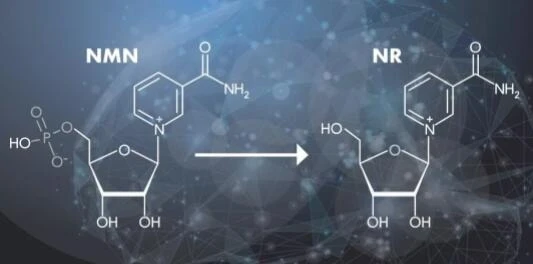
According to statistics, Americans spend billions of dollars on anti-aging products every year. The aging population is already a global topic, and the demand for delaying aging and managing chronic diseases caused by aging is increasing.
The difference is that while most beauty and anti-aging products try to reverse the signs of aging on the skin, nicotinamide riboside (NR) (also known as niacin) aims to reverse the signs of aging in the body.
In your body, nicotinamide riboside is converted into NAD+, a helper molecule that exists in each of your cells and supports many aspects of healthy aging.
This article describes everything you need to know about nicotinamide riboside, including its benefits, side effects, and dosage.
Products Description.
1. What is Nicotinamide Riboside?
Nicotinamide riboside or nicotinic acid is another form of vitamin B3, also known as niacin.
Nicotinamide riboside (NR) is a derivative of vitamin B3 and acts as a driver of nicotinamide adenine dinucleotide (NAD+). According to scientific peer-reviewed literature, nicotinamide riboside was discovered in 2004 as a vitamin precursor of NAD+ and in 2007 by Charles Brenner as a sirtuin[permanently broken link] (deacetylase) activating compound. Sirtuins[permanently broken link] are also associated with regulating DNA health and longevity in many organisms.
Like other forms of vitamin B3, nicotinamide riboside is converted by the body into nicotinamide adenine dinucleotide (NAD+), a coenzyme or helper molecule.
NAD+ acts as a fuel for many key biological processesTrusted Source:
Converts food into energy
Repairs damaged DNA
Strengthens cellular defense systems
Sets the body's internal clock, or circadian rhythm
However, the amount of NAD+ in your body naturally declines with age.
Lower NAD+ levels have been linked to health issues associated with aging and chronic conditions such as diabetes, heart disease, Alzheimer's disease, and vision loss.
Interestingly, animal studies have found that boosting NAD+ levels may help reverse signs of aging and reduce the risk of many chronic diseases.
Nicotinamide riboside supplements, such as niacin, have quickly gained popularity because they appear to be particularly effective at boosting NAD+ levels.
Nicotinamide riboside has also been found in trace amounts in milk, yeast, and beer.
Bottom Line: Nicotinamide riboside, or niacin, is another form of vitamin B3. It's recommended as an anti-aging supplement because it boosts your body's levels of NAD+, which is a fuel for many key biological processes.
2. Potential Benefits:
Since most of the research on nicotinamide riboside and NAD+ comes from animal studies, it's impossible to draw definitive conclusions about its effectiveness in humans. That said, we can only speak of some of the potential health benefits of nicotinamide riboside:
1. Easily converted to NAD+
NAD+ is a coenzyme, or helper molecule, involved in many biological reactions.
Although it's essential for maintaining health, studies show that NAD+ levels continue to decline with age. Lower NAD+ levels have been linked to aging and a variety of harmful diseases.
One way to boost NAD+ levels is to consume NAD+ precursors (the building blocks of NAD+), such as nicotinamide riboside.
Animal studies have shown that nicotinamide riboside can increase the amount of NAD+ in your blood by up to 2.7 times. What's more, it's easier for your body to use than other NAD+ precursors.
2. Activates enzymes that may promote healthy aging
Nicotinamide riboside helps increase NAD+ levels in your body.
In response, NAD+ activates certain enzymes that promote healthy aging.
One is sirtuins, which improve lifespan and overall health in animals. Studies show that sirtuins can repair damaged DNA, increase stress resistance, reduce inflammation, and provide other benefits that promote healthy aging. Sirtuins are also responsible for longevity in calorie restriction.
Another is poly (ADP-ribose) polymerase (PARP), which repairs damaged DNA. Studies have linked higher PARP activity to less DNA damage and longer lifespan.
3. May Help Protect Brain Cells
NAD+ plays a key role in helping your brain cells age.
Within brain cells, NAD+ helps control the production of PGC-1-alpha, a protein that appears to help protect cells from oxidative stress and impaired mitochondrial function.
Researchers believe that both oxidative stress and impaired mitochondrial function are involved in age-related brain diseases, such as Alzheimer's and Parkinson's.
In mice with Alzheimer's disease, nicotinamide riboside increased the brain's NAD+ levels and PGC-1-alpha production by 70% and 50%, respectively. By the end of the study, the mice performed significantly better on memory-based tasks.
In a test-tube study, nicotinamide riboside increased NAD+ levels in stem cells from people with Parkinson's disease and significantly improved mitochondrial function.
However, it's unclear how much help boosting NAD+ levels can have in people with age-related brain disorders. More human studies are needed.
4. May Reduce Heart Disease Risk
Aging is a major risk factor for heart disease, the leading cause of death in the world. It can cause blood vessels like your aorta to thicken, stiffen, and soften.
Such changes can raise blood pressure levels and affect your heart.
In animals, boosting NAD+ helped reverse age-related changes in arteries.
In humans, nicotinamide riboside boosts NAD+ levels, helps reduce aortic stiffness, and lowers systolic blood pressure in adults at risk for high blood pressure. However, more human research is still needed.
5. Other Potential Benefits
In addition, nicotinamide riboside may provide several other benefits:
May help with weight loss: Nicotinamide riboside helped speed up the metabolism of mice. However, it is not clear whether it would have the same effect in humans and how strong the effect would be.
May reduce cancer risk: High NAD+ levels help prevent DNA damage and oxidative stress, which are associated with the development of cancer.
May help treat jet lag: NAD+ helps regulate the body's internal clock, so taking nicotine may help treat jet lag or other circadian rhythm disorders by resetting the body's internal clock.
May promote healthy muscle aging: Boosting NAD+ levels helped improve muscle function, strength, and endurance in older mice.
Bottom Line: Nicotinamide riboside increases NAD+ levels, which is associated with potential health benefits such as aging, brain health, heart disease risk, and more.
3. Risk Potential and Consequences:
Nicotinamide riboside is safe and has almost no side effects.
In human studies, taking 1,000 to 2,000 mg per day has no harmful effects. However, most human studies were short in duration and had small participants. More robust human studies are needed to more accurately understand its safety.
Some people have reported starvation to moderate side effects such as nausea, fatigue, hunger, diarrhea, stomach discomfort, and indigestion.
In animals, taking 300 mg per kilogram (136 mg per pound) per day had no harmful effects on animals for 90 days.
And, unlike vitamin B3 (niacin) supplements, nicotinamide riboside does not cause facial flushing.
Summary: Nicotinamide riboside series appears to be safe and has almost no side effects. But its long-term effects on humans are still relatively unknown.
4. Dosage and Recommendations:
Nicotinamide riboside is available in tablet or capsule form and is commonly referred to as niacin. It can be purchased in some health food stores, on Amazon, or through online retailers.
Urea supplements typically contain only nicotinamide riboside, but some manufacturers combine it with other ingredients such as nicotinamide, which is a polyphenol that is chemically similar to resveratrol.
Most niacin supplement brands recommend taking 250–300 mg per day, depending on the brand, which is equivalent to 1–2 capsules per day.
Summary: Most niacin manufacturers recommend taking 250–300 mg of nicotinamide riboside per day.
5. Conclusion:
Nicotinamide riboside is another form of vitamin B3 that has few side effects. It is often marketed as an anti-aging product. Your body converts it into NAD+, which provides energy to all your cells. Although NAD+ levels naturally decline with age, boosting NAD+ levels may reverse some signs of aging. However, most studies on nicotinamide riboside and NAD+ have been conducted in animals. More high-quality human studies are needed before it can be recommended as a treatment.