

Astaxanthin is a potent antioxidant known for its health benefits, particularly for skin health, eye health, and reducing inflammation. When considering astaxanthin products, such as astaxanthin microcapsule powder versus astaxanthin powder, here are the key differences and considerations:
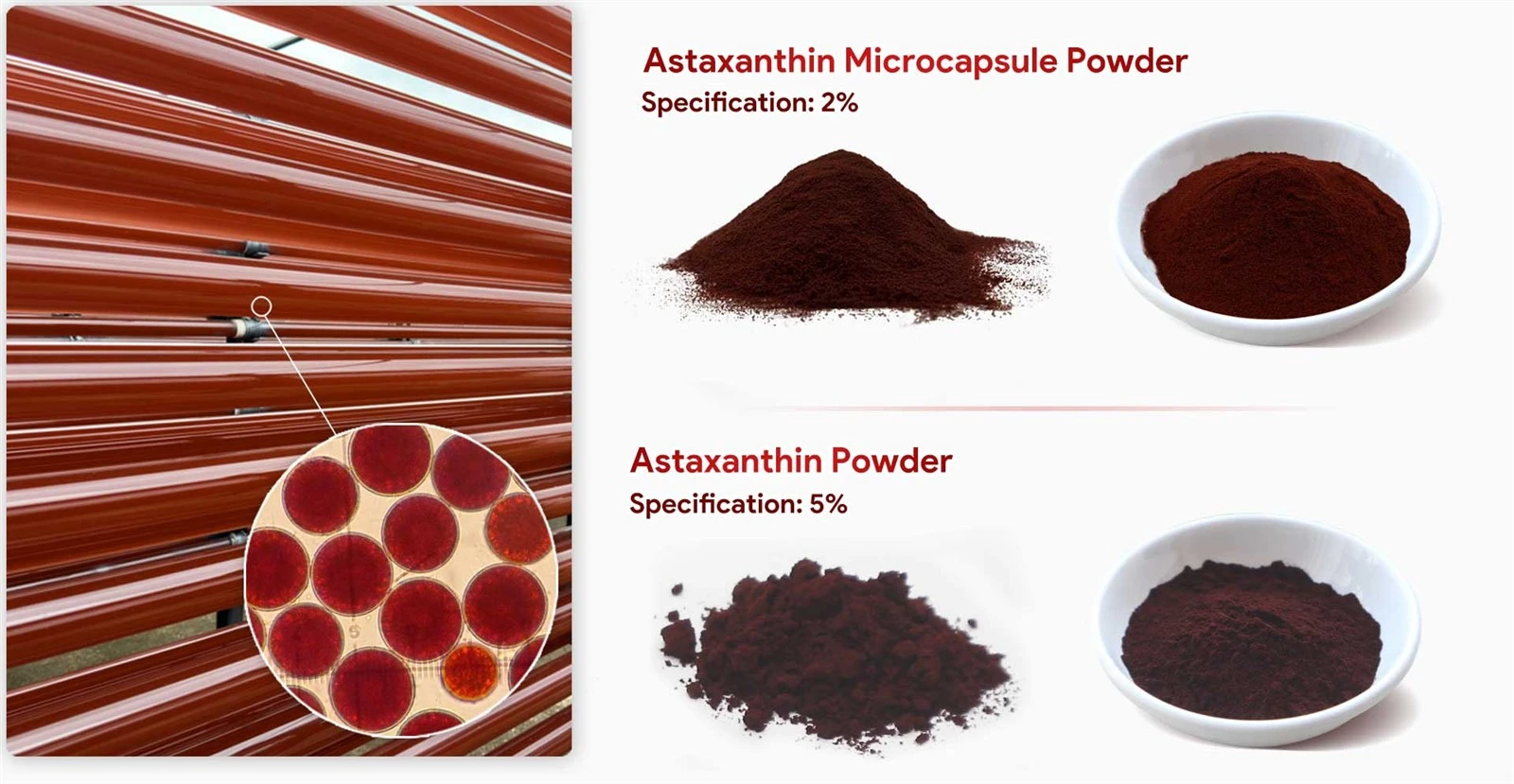
Astaxanthin Microcapsule Powder
- Formulation
Microcapsule powder typically refers to astaxanthin powder that has been encapsulated in a protective coating. This encapsulation can serve several purposes:
1. Protection: Microencapsulation protects astaxanthin from degradation due to exposure to light, heat, or oxygen, which can enhance its stability and shelf life.
2. Bioavailability: Microcapsules can improve the absorption and bioavailability of astaxanthin in the body, ensuring more efficient delivery and utilization.
- Usage
Microencapsulated astaxanthin is often used in supplements where stability and bioavailability are crucial factors. It allows for easier formulation into capsules or tablets without concerns about degradation.
- Benefits
1. Enhanced Stability: Less prone to oxidation and degradation, ensuring potency over time.
2. Improved Bioavailability: Better absorption and utilization by the body compared to non-microencapsulated forms.
3. Applications: Commonly found in dietary supplements, particularly those focused on antioxidant support, skin health, eye health, and joint support.
Astaxanthin Powder
- Basic Form
Astaxanthin powder without microencapsulation may be less stable and more susceptible to degradation from environmental factors like light, heat, and oxygen.
- Usage
Astaxanthin powder is typically used in applications where immediate stability or bioavailability may be less critical, such as in topical skincare formulations or some food products.
- Benefits
1. Versatility: Can be used in a variety of applications, including cosmetics, food products, and some supplements.
2. Cost: Non-microencapsulated forms may be more cost-effective depending on the manufacturing process and quality.
Considerations:
3. Purpose: Choose the form based on your intended use. If you need astaxanthin for a supplement focused on health benefits, microencapsulated powder may offer better stability and absorption. For topical or certain food applications, non-microencapsulated powder might suffice.
4. Quality: Ensure that whichever form you choose, it comes from a reputable source with quality assurance practices to guarantee purity and potency.
5. Dosage and Usage: Follow recommended dosages and usage guidelines as per the product label or healthcare provider's advice.
In summary, astaxanthin microcapsule powder offers enhanced stability and bioavailability compared to standard astaxanthin powder, making it preferable for dietary supplements where these factors are critical. Standard astaxanthin powder may be suitable for less demanding applications where stability and bioavailability are less of a concern.