

If you're diving into the world of natural superfoods or vibrant, Instagram-worthy beverages, you've likely come across blue matcha butterfly pea flower tea powder and butterfly pea flower extract. These two ingredients, derived from the Clitoria ternatea plant (commonly called butterfly pea), have surged in popularity for their stunning color-changing properties, antioxidant richness, and versatile uses in drinks, baking, and even skincare. But while they share the same botanical origin, they differ significantly in processing, potency, solubility, and best uses. In this guide, we'll break down everything you need to know to choose the right one for your needs-plus their top health benefits and practical applications.
What Are Blue Matcha Butterfly Pea Flower Tea Powder and Butterfly Pea Flower Extract?
First, let's clarify a common misconception: "blue matcha" is not a true matcha (which comes from green tea leaves). Instead, it's a marketing term for butterfly pea flower powder-finely ground dried butterfly pea petals that mimic matcha's texture and versatility. Both the powder and extract are made from the vibrant blue petals of the butterfly pea plant, a legume native to Southeast Asia that has been used for centuries in traditional medicine and as a natural food coloring in countries like Thailand.
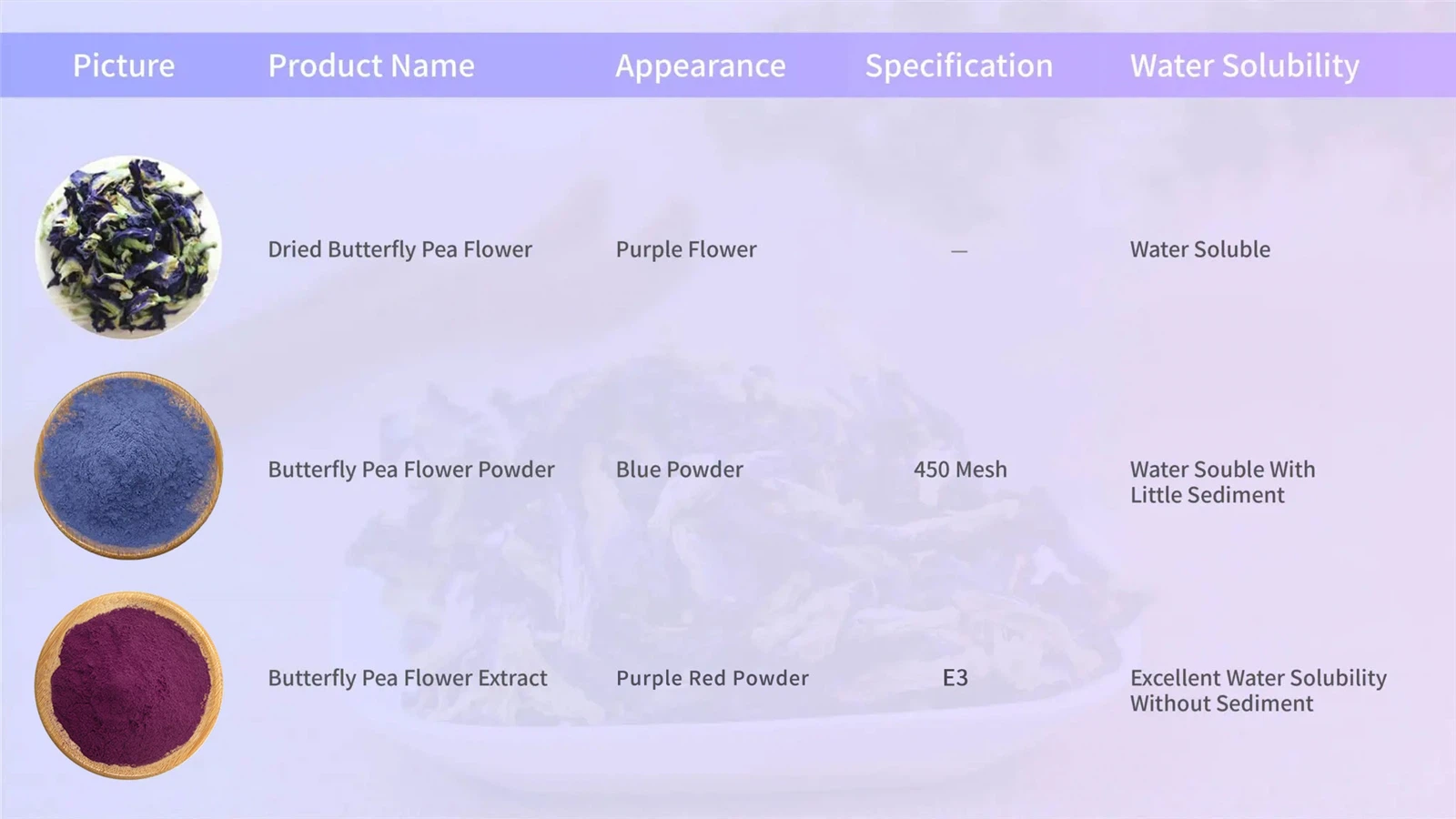
Blue Matcha Butterfly Pea Flower Tea Powder
Butterfly pea flower tea powder (blue matcha) is created by drying butterfly pea flowers and grinding them into a fine, vibrant blue powder. High-quality versions use only the petals (no stems or leaves) to ensure a pure color and flavor. Unlike true green matcha, it is naturally caffeine-free, making it a popular alternative for those sensitive to caffeine. It retains the plant's natural anthocyanins (specifically ternatins, a stable type of anthocyanin) that give it its signature blue hue and color-changing magic when exposed to different pH levels.


Butterfly Pea Flower Extract
Butterfly pea flower extract is a concentrated form of the plant's bioactive compounds. It's typically made via maceration (soaking the flowers in a solvent like ethanol or water) to extract anthocyanins, flavonoids, and phenolics, then filtering and drying the mixture into a liquid, powder, or capsule form. The extraction process removes excess plant material, resulting in a more potent product-meaning you need less to get the same color or health benefits as the regular powder.


Key Differences: Powder vs. Extract
Understanding these differences will help you pick the right ingredient for your goals, whether you're making lattes, baking, or boosting your wellness routine.
1. Processing & Potency
Blue Matcha Powder: Minimal processing-just drying and grinding. It's a whole-food product that retains the flower's fiber and other natural compounds, but it's less concentrated than the extract. You'll need 1–2 teaspoons per serving for color or flavor.
Butterfly Pea Flower Extract: Highly concentrated, as the extraction process isolates the plant's active ingredients. A small amount (a few drops of liquid extract or a pinch of powdered extract) is enough to add color or deliver health benefits. This makes it ideal for those who want maximum potency without using large quantities.
2. Solubility & Color
Both ingredients get their blue color from anthocyanins, which act as natural pH indicators-turning purple or pink when mixed with acidic ingredients (like lemon juice) and teal or green in alkaline environments (like tap water with high pH).
Blue Matcha Powder: Dissolves well in hot or cold liquids, though it may leave a slight residue if not whisked thoroughly (similar to true matcha). It's heat-stable, making it perfect for baking-retaining its color even in cookies, bread, or dumplings.
Butterfly Pea Flower Extract: Liquid extracts dissolve instantly in liquids, with no residue. Powdered extracts are also highly soluble. However, some liquid extracts may contain alcohol (used in the extraction process), which can affect flavor if not diluted. Extracts are also heat-stable but are often used in smaller amounts for color, as their concentration can lead to a deeper blue faster.
3. Flavor Profile
Blue Matcha Powder: Has a mild, earthy, and slightly woody flavor-similar to green tea or dried beans. It's neutral enough to pair with sweeteners (honey, vanilla) or other flavors (coconut, citrus) in lattes, smoothies, or desserts. The flavor is more pronounced than the extract, which can be a plus for culinary creations where you want a subtle floral note.
Butterfly Pea Flower Extract: Most extracts have little to no flavor, as the extraction process focuses on bioactive compounds rather than taste. This makes them ideal for adding color to dishes or drinks without altering the flavor-great for cocktails, frostings, or savory recipes where you don't want an earthy aftertaste.
4. Uses
Best for Blue Matcha Powder:
- Hot or cold lattes (blue matcha lattes with milk and honey)
- Smoothies, acai bowls, and overnight oats (adds color and fiber)
- Baking (cookies, muffins, cakes, and dumplings-retains color when baked)
- Homemade teas (steeped like loose-leaf tea, no straining needed)
- Natural food coloring for desserts like ice cream or macarons
Best for Butterfly Pea Flower Extract:
- Cocktails and mocktails (adds vibrant color without altering flavor)
- Skincare products (serums, face masks-concentrated anthocyanins for skin health)
- Wellness supplements (capsules or liquid drops for targeted health benefits)
- Frostings, glazes, and candy (no gritty texture, intense color with small amounts)
- Flavor-sensitive recipes (where you want color without earthy notes)
Health Benefits of Both Ingredients
Butterfly pea flower-whether in powder or extract form-is packed with bioactive compounds that offer numerous wellness benefits, backed by preclinical studies and traditional use.
1. Rich in Antioxidants
Both powder and extract are high in anthocyanins (ternatins), flavonoids, and phenolic compounds-powerful antioxidants that fight free radicals, reduce oxidative stress, and support overall cellular health. One study found butterfly pea flower extract contains 36.37 mg gallic acid equivalent (GAE)/g of phenolics and 19.44 mg quercetin equivalent (QE)/g of flavonoids, with strong antioxidant activity (IC50 index of 49.47 µg/ml).
2. Supports Brain Health
Regular consumption may boost acetylcholine levels in the brain, a neurotransmitter essential for memory, focus, and cognitive function. This can help reduce age-related memory loss and improve overall brain health, making it a popular ingredient in wellness routines for mental clarity.
3. Promotes Skin & Hair Health
Anthocyanins and flavonoids stimulate collagen production, slow skin aging, and improve skin tone and texture. For hair, the compounds nourish follicles, promote growth, reduce hair fall, and slow graying-making both ingredients popular in natural hair and skincare products.
4. Other Wellness Perks
Traditional and modern research highlights additional benefits, including anti-inflammatory properties (reducing swelling and pain), blood pressure regulation, blood sugar control (aiding diabetic management when paired with medication), and digestive support (relaxing stomach muscles and preventing gut worms). Some studies also suggest potential anticancer properties, as the plant's compounds may inhibit cancer cell growth-though more human research is needed.
How to Choose: Powder or Extract?
Use this quick guide to decide which ingredient fits your needs:
- Choose Blue Matcha Powder If: You want a whole-food ingredient for lattes, baking, or teas; you enjoy subtle earthy flavors; or you want to add fiber to your diet. It's also more affordable and widely available for culinary use.
- Choose Butterfly Pea Flower Extract If: You need concentrated potency for supplements or skincare; you want to add color without altering flavor; or you prefer a no-residue, easy-to-dissolve option for cocktails or delicate recipes. It's ideal for those focused on targeted health benefits with minimal product use.
Tips for Buying High-Quality Products
To get the best results (and avoid additives), look for these qualities when shopping for butterfly pea flower powder or extract:
- Powder: Choose USDA-certified organic, 100% pure (no fillers, preservatives, or added sugar), and wild-harvested or sustainably sourced (preferably from Southeast Asia). Avoid products with dull color, as this indicates low anthocyanin content.
- Extract: Opt for alcohol-free liquid extracts (if using in food/drinks) or powdered extracts with no artificial additives. Check for concentration levels (higher anthocyanin content means more potency) and third-party testing for purity.
Final Thoughts
Both blue matcha butterfly pea flower tea powder and butterfly pea flower extract are versatile, nutrient-dense ingredients that bring color and wellness to your routine. The powder shines in culinary creations, offering a mild flavor and fiber, while the extract excels in concentrated applications-from supplements to flavor-neutral colorants. Whether you're a home baker, wellness enthusiast, or mixologist, incorporating butterfly pea flower into your routine is a simple way to add natural vibrancy and health benefits.
Ready to try them? Start with a blue matcha latte (whisk 1 teaspoon of powder with hot water, then add milk and honey) or a colorful cocktail (add a few drops of extract to soda water and lemon juice) to experience their magic firsthand!