

Overview:
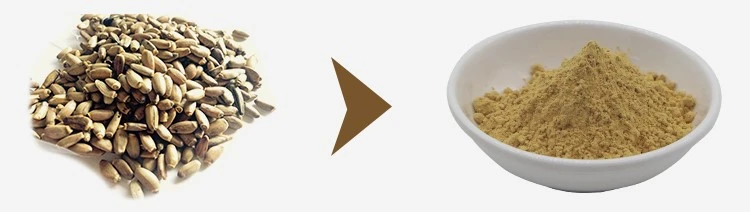
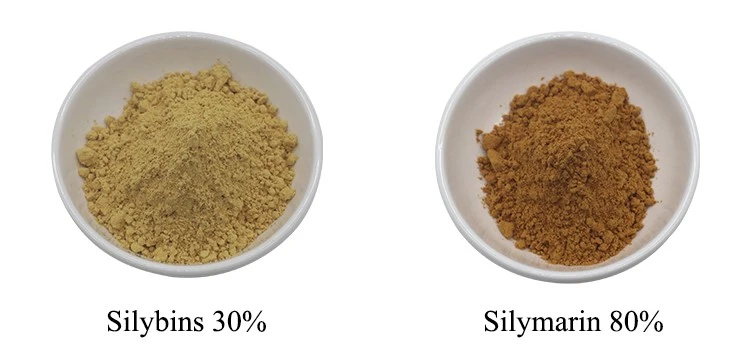
Silybin is the component with the highest content in silymarin. It has pharmacological activities such as scavenging free radicals, resisting lipid peroxidation, protecting liver cell membranes, promoting damaged liver cells to synthesize DNA and structural proteins, and resisting fibrosis. It has good therapeutic effects on acute and chronic hepatitis, metabolic toxic liver damage and cirrhosis. It has been marketed as a drug and is a liver damage repair drug recognized worldwide.
Silymarin is a class of dihydroflavonol compounds that has the effects of resisting liver poisoning and protecting liver cells. It can be used as a bile excretion agent. It has good therapeutic effects on acute and chronic hepatitis, cirrhosis, metabolic toxic liver damage, gallstones, recurrent pain caused by gallstones, cholangitis and other liver and gallbladder diseases.
Main Applications:
Widely used in medicine and health care, functional food, etc.
Efficacy and Effects:
1.Hepatoprotective and anti-oxidative effects
Silymarin can protect liver cell membranes by resisting lipid peroxidation and maintaining cell membrane fluidity; it can also inhibit the release of superoxide anions from neutrophils to reduce liver cell damage caused by inflammatory cells. Other studies have shown that silymarin can increase the expression of superoxide dismutase (SOD) in lymphocytes in mice with chronic alcoholic liver disease, thereby playing an antioxidant role. In addition, studies have also reported that silymarin can reduce the production of oxidative substances such as reactive oxygen species (ROS) and malondialdehyde (MDA).
2.Anti-fibrosis effects of the liver
Several studies have confirmed that silymarin achieves anti-fibrotic effects by resisting oxidation and directly inhibiting the activation of hepatic stellate cells (HSC) by various cytokines.
3.Hepatoprotective and lipid-lowering effects
Mouse experiments have confirmed that silymarin can reduce the content of triglycerides (TG) in the liver and the levels of serum TG and total cholesterol (TCh). Moreover, these animal experiments also show that after the intervention of silybin, the liver pathology (such as fatty degeneration, inflammation and hepatocyte ballooning) has been improved to varying degrees. Some studies also suggest that the drug can reduce the weight of the test animals.
4.Anti-inflammatory effect
Silybin can reduce the levels of various pro-inflammatory cytokines, such as IL-8, IL-6, MCP-1 and TNF-α, thereby exerting an anti-inflammatory effect. This effect is achieved by inhibiting the activity of IKK-β and p50 and p65, thereby inhibiting the action of NF-κB.