

In the market of health and nutritional supplements, astaxanthin has attracted much attention due to its excellent antioxidant properties and multiple health benefits. Do you know the difference between Haematococcus pluvialis powder, astaxanthin microcapsule powder and astaxanthin oil? Do you know their respective preparation processes, ingredient characteristics and application scenarios?
Today, we will take you to deeply analyze the differences and connections between these three.
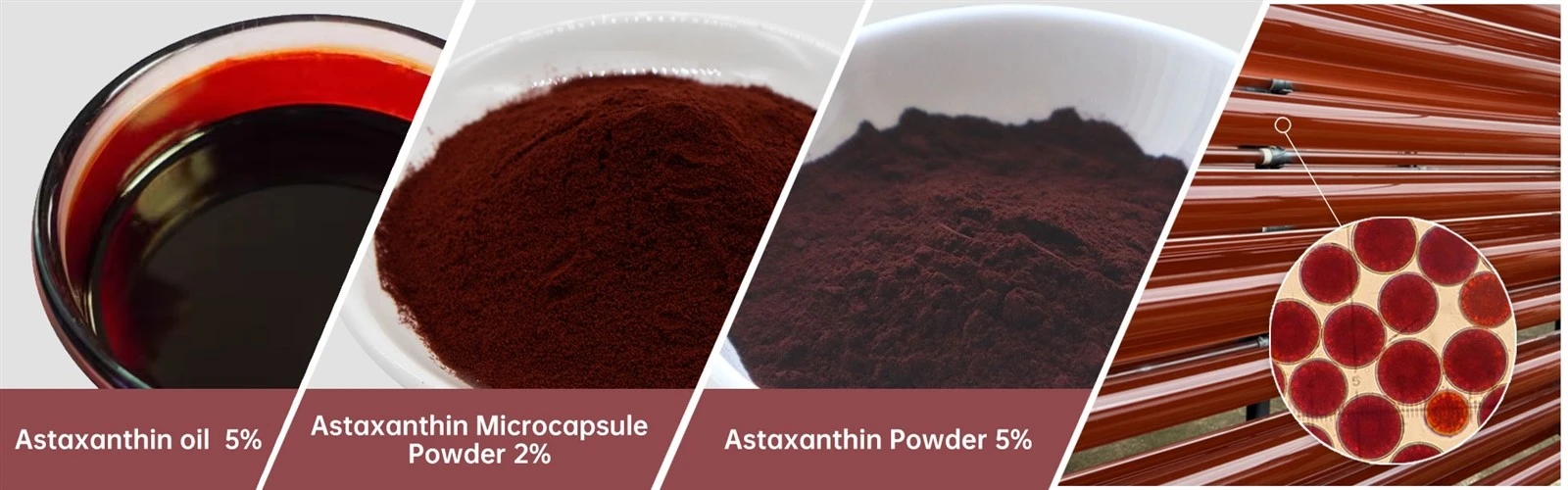
Haematococcus Pluvialis Powder
Source and Characteristics:
Haematococcus pluvialis is a microalgae rich in natural astaxanthin, and its astaxanthin content ranks among the best in nature. Haematococcus pluvialis powder is a powdered product made by drying and breaking the cells of Haematococcus pluvialis. This powder not only retains the rich astaxanthin components in Haematococcus pluvialis, but also contains a variety of other trace elements and bioactive substances, such as protein, fatty acids, polysaccharides, etc.
Application:
Haematococcus pluvialis powder is widely used in health care products, functional foods and cosmetics due to its natural and comprehensive nutritional ingredients. As a direct source of astaxanthin, it is suitable for consumers who pursue natural and comprehensive nutritional supplements.
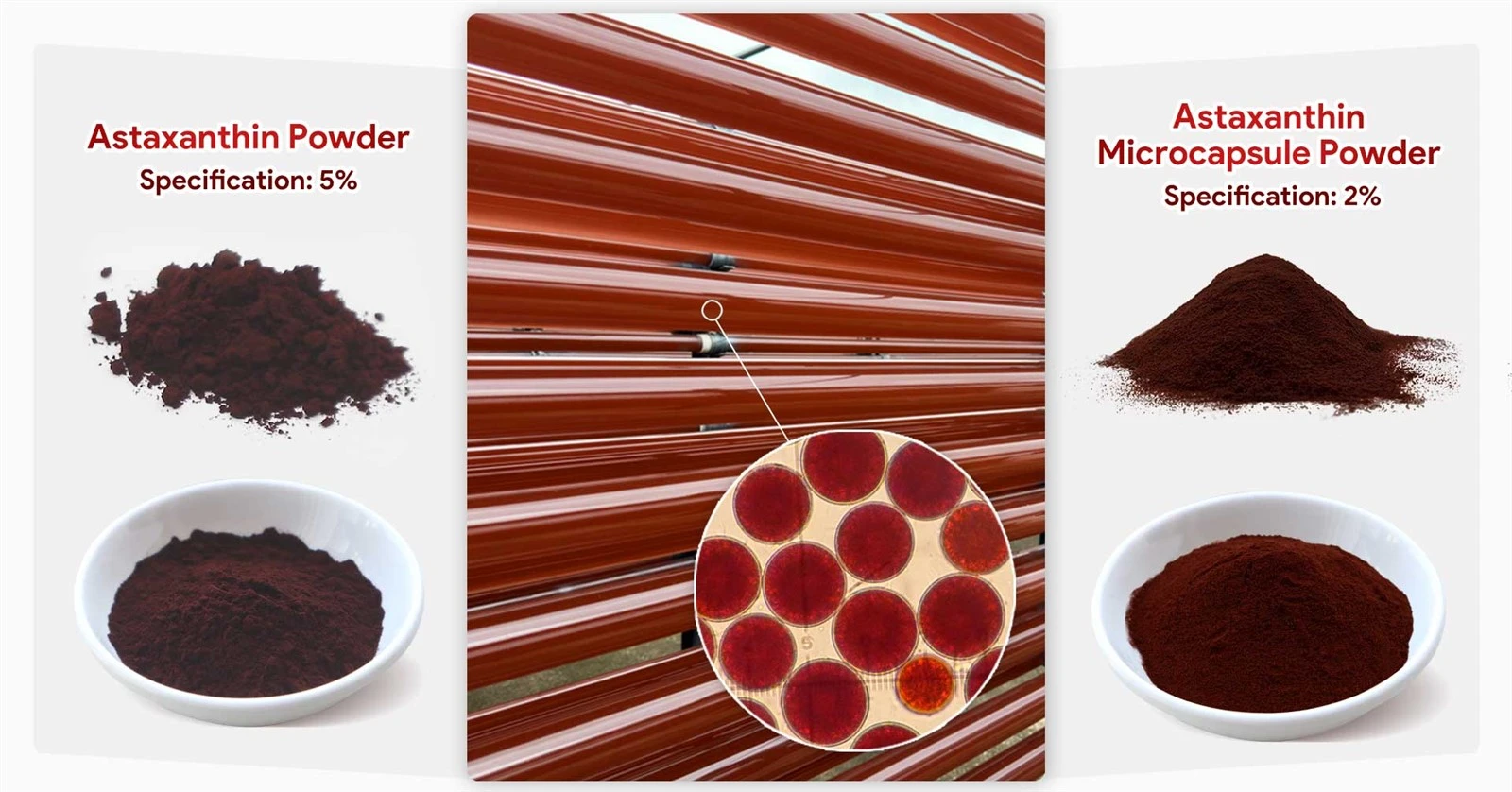
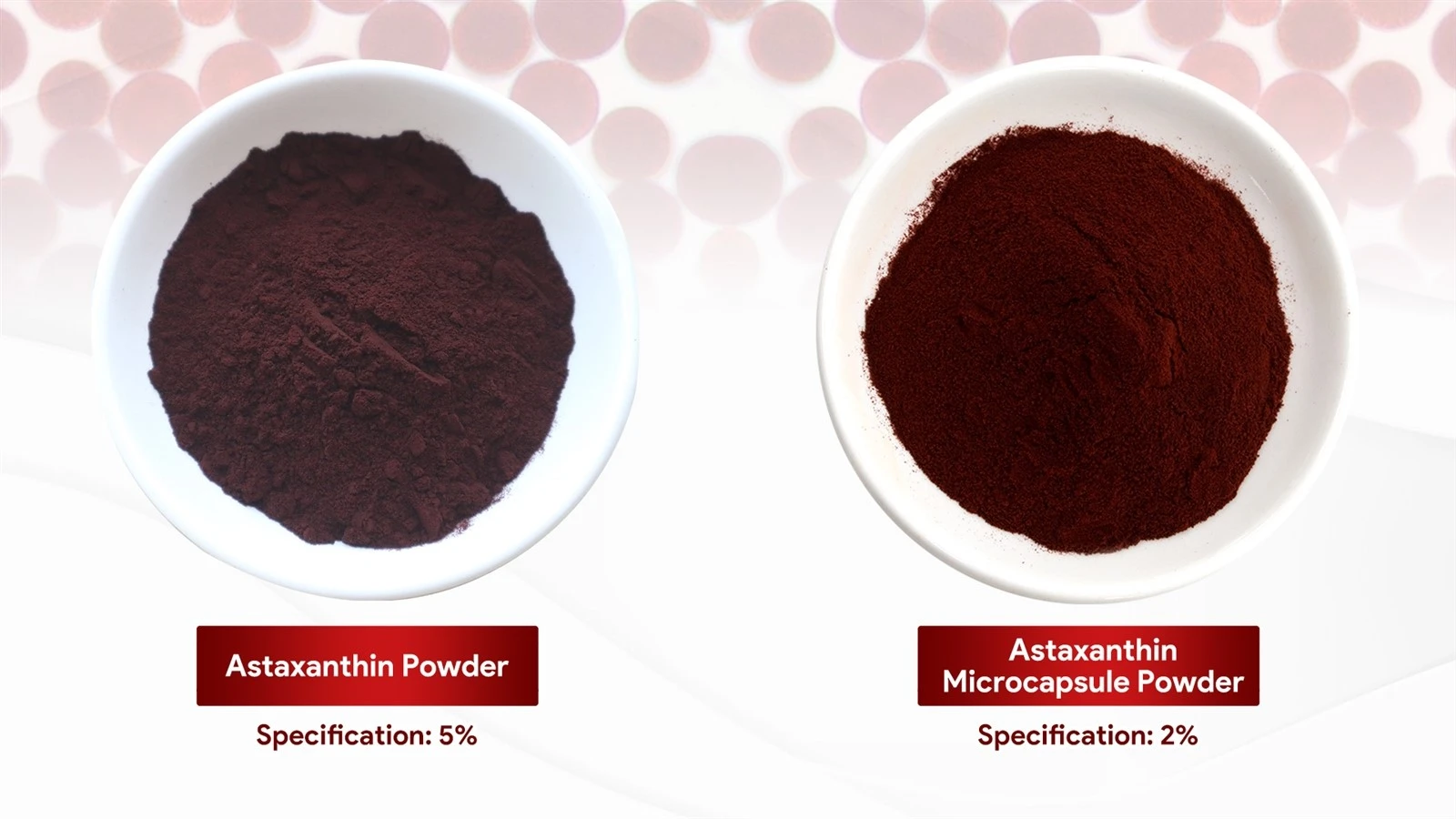
Astaxanthin Microcapsule Powder
Preparation Process:
Astaxanthin microcapsule powder is a powder made by encapsulating astaxanthin in polymer membrane materials using advanced microencapsulation technology based on astaxanthin extraction. This technology not only improves the stability of astaxanthin, but also improves its solubility and bioavailability, making it easier for the human body to absorb and utilize.
Features and Advantages:
Astaxanthin microcapsule powder is highly efficient, stable and easy to absorb. Through the protection of microcapsules, astaxanthin can resist the damage of adverse factors such as light, heat, and oxygen, and maintain its activity. At the same time, its good water solubility also makes it easier to add to various foods, beverages and cosmetics.
Application:
Astaxanthin microcapsule powder is widely used in high-end health products, functional beverages, beauty and skin care products and other fields due to its excellent performance. It can meet consumers' demand for efficient, convenient and stable astaxanthin supplements.
Astaxanthin Oil
Extraction and Form:
Astaxanthin oil is an astaxanthin oil extracted from Haematococcus pluvialis or other astaxanthin-rich raw materials through supercritical carbon dioxide extraction or other advanced extraction techniques. This oil is usually dark red or orange-red and is rich in high concentrations of astaxanthin and other fat-soluble components.
Characteristics and Uses:
Astaxanthin oil has the characteristics of high purity, fast absorption and significant effect. Its fat-soluble properties enable astaxanthin oil to quickly penetrate the cell membrane and enter the cell to play a role. Therefore, astaxanthin oil is an ideal choice for occasions where astaxanthin needs to be supplemented quickly or high-concentration astaxanthin intake is pursued. It is often used in high-end health products, professional nutritional supplements and specific medical purposes.
Analysis and Summary
Although Haematococcus pluvialis powder, astaxanthin microcapsule powder and astaxanthin oil are all derived from astaxanthin, a natural antioxidant, they have significant differences in process, ingredient characteristics and application scenarios.
Haematococcus pluvialis powder is favored for its natural and comprehensive nutritional ingredients; astaxanthin microcapsule powder improves stability and bioavailability through microencapsulation technology; and astaxanthin oil meets specific needs with its high purity and fast absorption characteristics.
When choosing, consumers should make reasonable choices based on their own needs and actual conditions.