

Did you know that hyaluronic acid can also be used in food? Hyaluronic acid is known to the public, mainly in the skin care and beauty industry, in fact, hyaluronic acid can also be added to food, such as hyaluronic acid soft candy, hyaluronic acid drinking water and so on. Can hyaluronic acid really be eaten? Come together to find out.
1. What is Hyaluronic Acid Food?
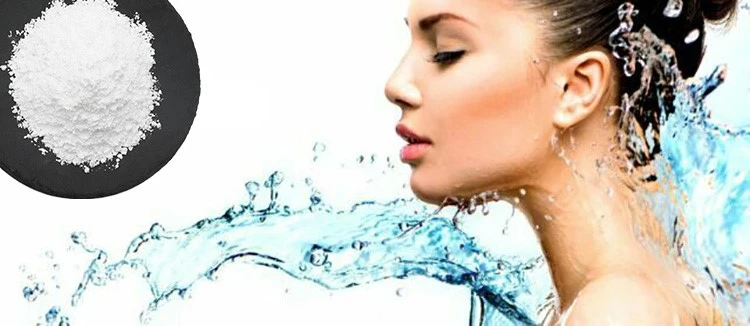
Hyaluronic acid (HA for short), also known as hyaluronic acid, is a naturally occurring high molecular polysaccharide with exceptional water retention properties and is known as an ideal natural moisturizing factor. Commercialized hyaluronic acid usually exists in the form of its sodium salt, i.e. sodium hyaluronate (abbreviated as SH). Sodium hyaluronate is easily hydrolyzed to hyaluronic acid in water, and both have similar functions and are widely found in human and animal bodies. However, since the physical and chemical properties of sodium hyaluronate are more stable than hyaluronic acid, it is often used in the form of sodium hyaluronate in the food field. Therefore, food with added sodium hyaluronate can be called hyaluronic acid food.
2. Preparation of Hyaluronic Acid
In 1934, Meyer et al, a professor of ophthalmology in the United States, first isolated hyaluronic acid from the vitreous humor of bovine eyes. At present, the preparation methods of hyaluronic acid can be divided into three kinds, including animal tissue extraction method, microbial fermentation method and synthesis method. Among them, the animal tissue extraction method refers to the preparation of hyaluronic acid from chicken crowns and the vitreous bodies of the eyes of pigs, cows and sheep. However, due to the limited source of raw materials, the extraction cost is high and the yield is low, so the selling price is expensive. Microbial fermentation method refers to the preparation by fermentation and purification process. The molecular weight size can be set according to the demand of goods. Because of low production cost and controllable quality, it is the main means of preparation nowadays. Synthetic method refers to the synthesis of hyaluronic acid through enzyme polymerization reaction. However, it is only in the laboratory research and development stage. In summary, it can be seen that microbial fermentation is now the main means of preparing hyaluronic acid.
3. Status of Ratification in Each Country
3.1 China
In 2008, the former Ministry of Health (MOH) issued the Announcement on the Approval of 7 New Resource Foods, including Lactobacillus acidophilus, which approved sodium hyaluronate produced by fermentation of Streptococcus equi subspecies of Streptococcus equi with glucose, yeast powder, peptone and so on as the medium for use as raw materials for health food, with a serving size of ≤200mg/day.
In 2021, the NHSC issued the "Announcement on Cicada Flower Substrate (Artificial Cultivation) and 15 Other 'Three New Foods'", which stipulates that sodium hyaluronate produced by fermentation of Streptococcus equi subspecies of veterinary plague using glucose, yeast powder, peptone, etc. as the medium can be used in milk and dairy products, beverages, and alcoholic beverages, and the maximum consumption amount of each type of food is limited to ≤200mg/day. It can be used in milk and dairy products, beverages, alcohol, etc., and limits the maximum serving size of each type of food. In addition, the announcement also stipulates that product labels and instructions should indicate that it is not suitable for infants and young children, pregnant women and nursing mothers, and that the recommended serving size is ≤200mg/day.
3.2 European Union
According to the "Authorization to place cockles extract on the market as a new food ingredient according to Regulation (EC) No. 258/97 of the European Parliament and of the Council" (2013/705/EU), the European Union has approved cockles extract (hyaluronic acid content of 60%-80%) as a new food ingredient. It can be added to milk beverages, milk fermented beverages, yogurt and other food products, and stipulates the additive limits for various types of food products.
3.3 United States
U.S. Food Flavor and Extract Manufacturers Association (referred to as FEMA) GRAS 31 list has approved sodium hyaluronate as a food flavor for baked goods, milk and dairy products, fats and oils, instant coffee and tea, etc., and provides for various types of food additive limits.
3.4 Australia and New Zealand
According to the "Australia and New Zealand Codex Alimentarius - Definitions for Use in the Codex" (Standard 1.1.2), Australia and New Zealand allow the addition of substances in the List of "Generally Recognized as Safe" (GRAS) Flavouring Substances published by FEMA as food flavourings. Therefore, ANZ also allows sodium hyaluronate to be added to food under the same provisions as FEMA.
Xi'an Pincredit Bio-Tech Co.,Ltd. is a professional manufacturer and supplier of Hyaluronic Acid.
For related products, please visit our website: https://www.nutritionaland.com/ or Contact Us For More Details>>