

In recent years, matcha has completely broken through the traditional single tea category limitation and evolved into a high-value universal raw material sweeping across food, beverage, dessert, beauty and health industries. With the global health consumption upgrade and the booming new consumer market, the matcha industry has ushered in explosive growth. As of 2026, the global matcha market scale has reached USD 5.4 billion, maintaining a steady compound annual growth rate of 7.9%–10.45%, and is expected to exceed USD 9.2 billion by 2033, with long-term profit growth space far exceeding traditional tea products . As the world's largest matcha producer, China accounts for nearly 70% of the global total output, with industrial growth rate twice the global average, providing sufficient high-quality raw material support for global commercial matcha applications .
More than a niche flavor, matcha has become a core profit driver for cross-industry brands. Its unique natural green color, rich mellow flavor, and superior nutritional attributes (rich in tea polyphenols, catechins, and vitamins) make it adaptable to diversified product iterations. Today's article will deeply analyze the wide commercial application scenarios of matcha, the latest industry profit trends, and why investing in matcha products is a high-return choice for businesses in 2026 and beyond.
1. Full-Scene Commercial Applications: Matcha Covers Multiple High-Profit Industries
The core competitiveness of the modern matcha industry lies in its ultra-high compatibility and scalable application. Different grades of matcha (ceremonial grade, culinary grade, industrial grade) can precisely meet the differentiated needs of high-end customization and mass industrial production, realizing full coverage from catering retail to daily consumer goods. Below are the mainstream commercial application fields with mature markets and stable profits.
01 Beverage Industry: The Largest Matcha Consumption Scenario
The new tea drink and ready-to-drink beverage track is the most mature and largest demand market for matcha. Compared with traditional tea and synthetic flavorings, pure natural matcha powder has a richer layered taste, no artificial additives, and higher consumer recognition, perfectly fitting the global trend of healthy, low-sugar, and natural consumption.
Commercial matcha is widely used in matcha latte, matcha milk tea, matcha sparkling water, matcha cold brew tea, and functional matcha drinks. Chain catering brands at home and abroad have taken matcha beverages as their flagship bestsellers for a long time. Data shows that the gross profit margin of matcha specialty drinks is 30%–50% higher than that of ordinary flavor drinks, with strong customer repurchase willingness and low seasonal off-season attributes, effectively boosting store comprehensive revenue.

02 Baking & Dessert Industry: High Premium & Strong Visual Appeal
Matcha's unique emerald green color and elegant grassy flavor endow baked goods and desserts with superior visual and taste differentiation, becoming a high-margin premium product label in the baking industry. In the global high-end baking market, matcha series products have always maintained a high unit price and strong market competitiveness.
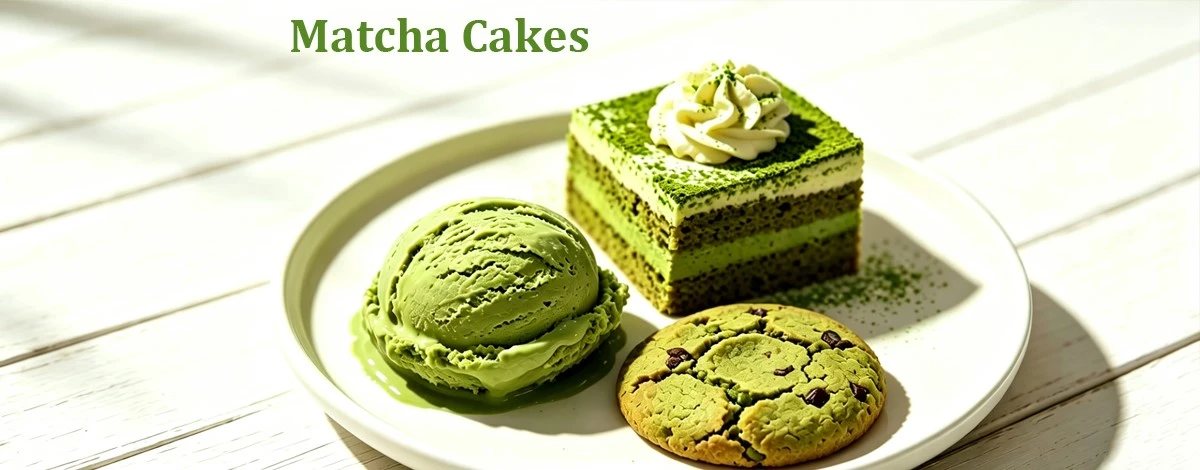
At present, industrial matcha powder is deeply applied in matcha bread, matcha cake, matcha cookies, matcha mousse, matcha ice cream, and matcha chocolate. Different fineness matcha powders can adapt to different baking processes: ultra-fine ceremonial grade matcha is used for high-end dessert surface decoration and flavor enhancement, while stable industrial culinary grade matcha is suitable for mass baking production, with stable color and taste, not easy to oxidize and fade. The premium space of matcha baking products is significantly higher than that of ordinary original and fruit flavors, bringing huge profit margins for baking brands.
03 Snack & Convenience Food: Mass Market & Large Sales Volume
With the popularity of the "matcha craze" among young consumers, matcha has become a mainstream popular flavor in the leisure snack industry. Major supermarket brands and snack manufacturers have successively launched matcha-themed snack series, realizing large-scale sales and rapid market penetration.
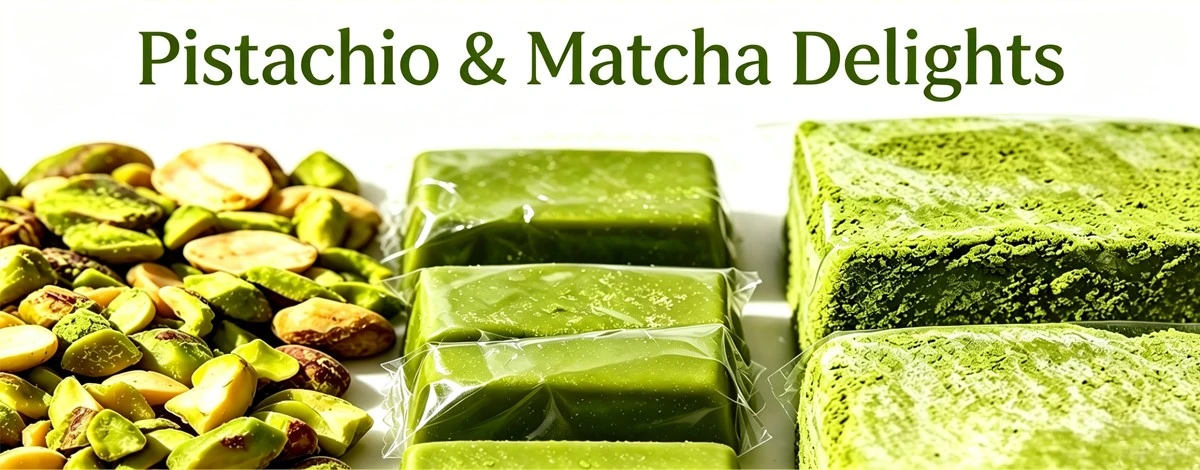
Matcha is widely used in matcha puffed snacks, matcha nuts, matcha candy, matcha yogurt, and matcha instant cereal. Relying on its natural healthy attributes, it solves the pain point of single flavor and excessive artificial additives in traditional snacks. This track features low raw material cost, large market demand, and fast capital turnover, which is very suitable for mass production and wholesale sales, and is one of the core growth points of the matcha industrial market in recent years .
04 Personal Care & Beauty Industry: Emerging High-Value Track
Matcha is rich in natural antioxidants, tea polyphenols and amino acids, with excellent anti-oxidation, soothing and brightening effects. In recent years, it has become a popular natural raw material in the global beauty and personal care industry, opening up a new high-profit application market beyond food and beverage.
At present, matcha extract and matcha powder are applied in matcha facial mask, matcha body lotion, matcha hand cream, matcha facial cleanser, and matcha essential oil products. Natural plant-based skincare raw materials are more in line with the clean beauty consumption trend, and matcha beauty products have higher added value and profit margins than ordinary chemical formula products, with outstanding market growth potential .

05 Health & Functional Food: Long-Term Strategic Growth Track
Under the global health consumption upgrade, matcha's nutritional value has been fully explored. It contains rich dietary fiber, catechins and trace elements, with the functions of anti-oxidation, intestinal regulation and fatigue relief, making it an important raw material for functional health food.
Commercial matcha is used in matcha meal replacement powder, matcha probiotic powder, matcha health tea bags, and low-calorie functional matcha drinks. Positioned in the high-growth health consumer market, such products have strong customer stickiness and high product added value, becoming a long-term stable profit growth point for the matcha industry.
2. 2026 Matcha Industry Profit Trend: Stable Growth & Low Risk & High Return
The reason why more and more brands and wholesalers choose to lay out the matcha track is that the matcha industry has outstanding commercial profitability and anti-risk attributes. Different from trendy niche products with short lifespans, matcha, relying on its cross-industry adaptability and healthy attribute endorsement, has formed a sustainable growth industrial ecology. The core profit trends are summarized as follows:
01 Continuous Market Expansion & Growing Consumer Demand
The global matcha market maintains a double-digit growth rate, and the Chinese matcha industry's compound growth rate reaches 28.67%, nearly twice the global average . Consumer groups are no longer limited to tea lovers; young people, health-conscious groups, and beauty enthusiasts have all become core consumers, realizing full-age and full-scene demand coverage. Market demand continues to expand, bringing stable order volume and sales guarantee for matcha raw material suppliers and product processors.
02 Low Raw Material Cost & High Product Premium
China, as the world's core matcha producing area, has complete industrial chain supporting facilities and sufficient output, which can effectively control raw material procurement costs . After deep processing and scenario-based application, the premium space of matcha products is extremely large: the gross profit of catering matcha drinks exceeds 60%, the premium of high-end matcha desserts is more than double, and the profit margin of matcha beauty and health products is even higher, forming a low-cost and high-return business model.
03 Strong Brand Adaptability & Low Iteration Risk
Matcha is not a short-term Internet celebrity flavor, but a classic and versatile commercial raw material. It can adapt to low-end mass consumption and high-end customized market, and can be flexibly matched with products of different positioning. The product iteration cycle is long, and there is no risk of rapid market elimination. It is a stable and reliable profit track for long-term business layout.
04 Export Market Blows Out & Global Demand Rises
Chinese matcha is accelerating its entry into the global market, docking with EU, Southeast Asian and American market standards . The overseas demand for commercial matcha raw materials and finished products is rising year by year, and the export profit space is continuously expanded. For cross-border merchants and global wholesalers, Chinese high-quality matcha has absolute cost performance and competitive advantages.
3. Why Choose Commercial Matcha Cooperation? Stimulate Long-Term Business Value
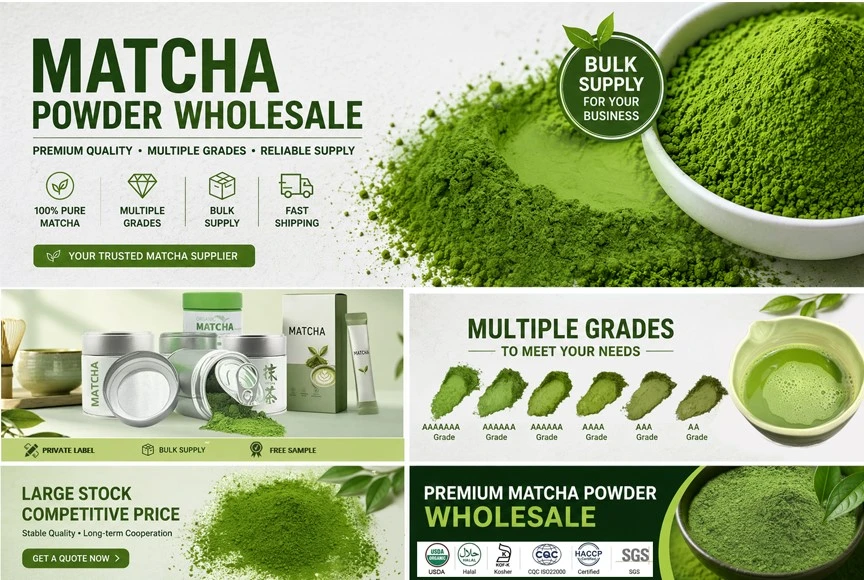
For catering store owners, food processing factories, beauty brands and cross-border wholesalers, laying out the matcha track in 2026 is a definite high-value investment. We provide multi-grade pure natural matcha powder (ceremonial grade, culinary grade, industrial grade), which can meet the personalized application needs of all scenarios such as beverages, baking, snacks, and beauty care.
Our matcha is made from high-quality tea garden raw materials, processed through ultra-fine grinding technology, with pure color, rich flavor, stable quality, and compliant with international export standards. It supports customized fineness, customized packaging and wholesale bulk supply, helping customers quickly launch high-margin matcha products and seize the booming market dividend.
Final Conclusion
From a single tea drink to a cross-industry universal high-value raw material, matcha has completed the transformation from a niche category to a mainstream commercial track. With the continuous upgrade of global health consumption and the continuous enrichment of application scenarios, the matcha industry's market scale and profit space will continue to expand in the next 5–10 years . Choosing high-quality commercial matcha raw materials and deploying matcha series products is the key for businesses to break through homogeneous competition and realize profit growth in 2026.
Call to Action: If you are looking for stable and high-profit new product projects and high-quality matcha wholesale suppliers, please contact us now! We provide free samples, professional scenario-based application solutions and global exclusive cooperation support to help your business tap into the huge dividend of the matcha industry.