

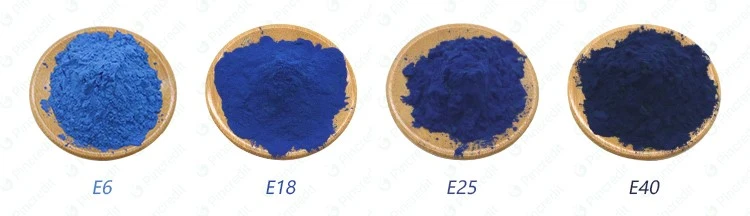
Widely Used as a Natural Blue Colorant with Certain Nutritional Value
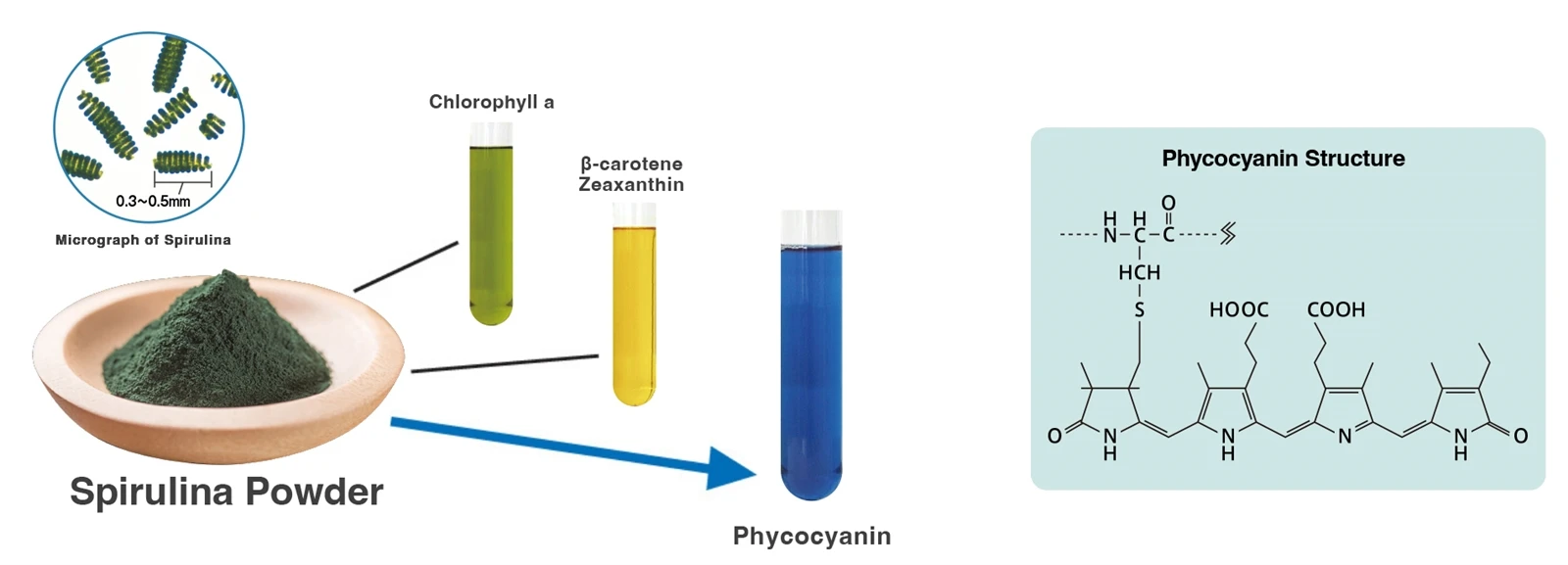
Phycocyanin is a natural blue pigment extracted from edible spirulina. It is a non-organic solvent, and because it is a water extraction process, this is also the key to its being called the safest natural blue pigment.
Substances containing edible blue colorants (pigments) in algae are very scarce, and phycocyanin is a component unique to spirulina that can present a modified blue color, and is widely used as a rare natural edible blue colorant (pigment).
Phycocyanin is a natural phytochemical that is currently attracting much attention in the food processing industry.
Phytochemicals are components that plants such as vegetables use to protect themselves from serious damage. They are said to have beneficial effects and can play the same beauty effects in our bodies.
In addition to the five essential nutrients for the human body (carbohydrates, proteins, fats, vitamins, supplements), dietary fiber is called the sixth nutrient. In recent years, phytochemicals have attracted attention as the "seventh nutrient".
Characteristics of Phycocyanin
1. The color is bright blue with a slight blue fluorescence.
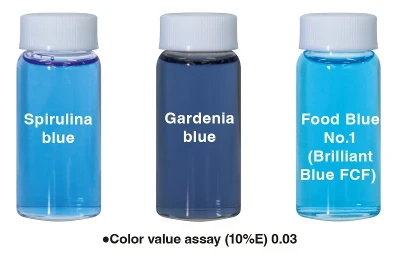
2. Compared with the blue of gardenia, the blue of spirulina is very bright and vivid.
3. The product is available in powder and liquid forms.
How to Use Phycocyanin?
1. It is generally added to food at a ratio of 0.01~0.1%.
2. The best time to add is below 60°C after the heating process.
3. Properly mixed with food coloring such as red and yellow can produce intermediate colors such as purple and yellow-green.
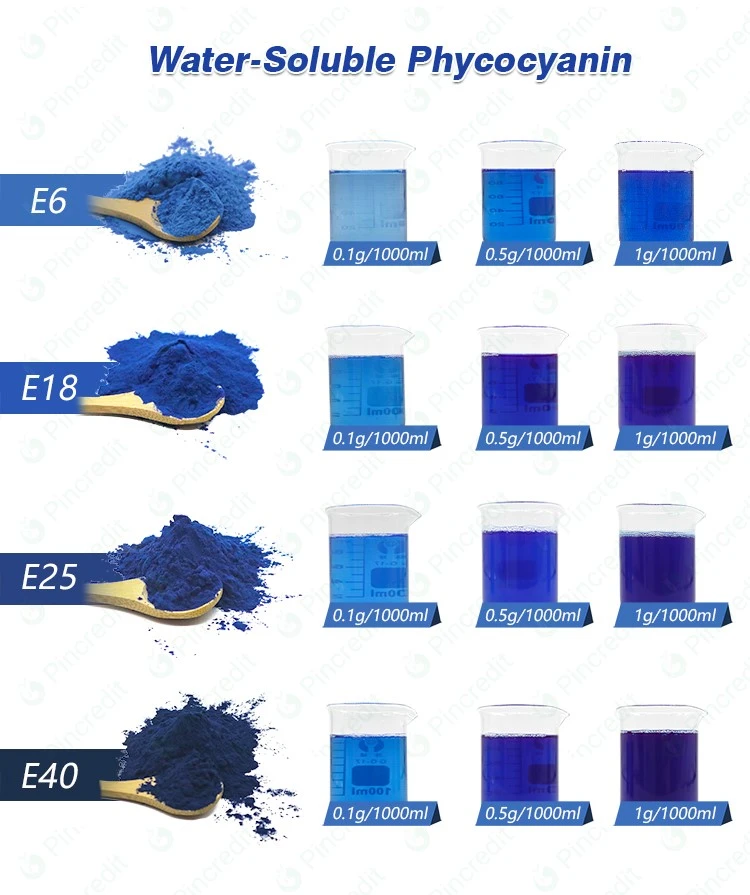
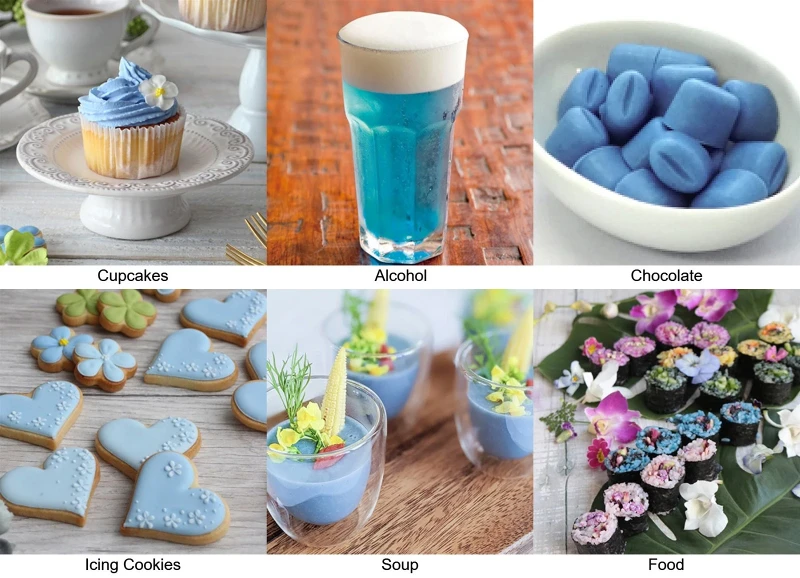
Phycocyanin - Application Example as a Natural Colorant
Phycocyanin is a natural blue colorant that can be used in a variety of foods.
1. Frozen candies: ice cream, popsicles, gelato, etc.
2. Candies: jelly, cakes, chewing gum, soft candy, candy, chocolate, etc.
3. Beverages: soft drinks, smoothies, alcohol, cocktails, etc.
4. Japanese desserts: wagashi, dango, bean paste, agar, etc.
5. Baked candies: cookies, muffins, donuts, etc.
6. Others: frosted bread, sushi rolls, noodles, wasabi, etc.
If you are looking for specialist materials, please contact us.