

Quercetin is extracted from the buds of sophora japonica tree. It usually refers to the dihydrate form of quercetin, also known as quercetin dihydrate. In addition to the dihydrate form, quercetin also exists in an anhydrous form called anhydrous quercetin.
| Product Name | From | Specification |
| Quercetin | Quercetin Dihydrate | 95% |
| Quercetin Anhydrous | 95%, 98% (USP) |

Quercetin dihydrate refers to the compound quercetin, which is chemically bonded to two water molecules. This means that each quercetin molecule contains two water molecules.
Quercetin anhydrous refers to the pure form of quercetin that does not contain any water molecules. The presence of water molecules in quercetin dihydrate affects its stability, solubility and other physical properties compared to anhydrous quercetin. Anhydrous quercetin is generally more stable and has a longer shelf life because the absence of water reduces its risk of degradation reactions.
For practical purposes, anhydrous quercetin is more suitable for certain applications, such as dietary supplements and pharmaceutical formulations, where precise dosage and stability are important factors. Quercetin dihydrate, on the other hand, can be used in research and laboratory settings where the presence of water is not an issue and may even be ideal for some applications. Ultimately, the choice between Quercus dihydrate and Quercetin anhydrous depends on the specific requirements of the intended application and the desired properties of the compound.
Quercetin is known for its antioxidant and anti-inflammatory properties, and it is often used as a dietary supplement with a variety of health benefits. Some potential benefits of quercetin include:
1. Anti-inflammatory effects: Quercetin has been shown to inhibit the production of inflammatory molecules in the body, potentially reducing inflammation and related conditions.
2. Antioxidant Properties: Quercetin acts as an antioxidant and helps protect cells from damage caused by free radicals, which may play a role in aging and various diseases.
3. Immune System Support: Quercetin has been studied for its potential to support the immune system and enhance immune function.
4. Cardiovascular health: Research shows that quercetin may have positive effects on cardiovascular health, such as lowering blood pressure, improving blood flow, and reducing the risk of heart disease.
5. Allergy relief: Quercetin can help relieve allergy symptoms by reducing the release of histamine, a chemical associated with allergic reactions.
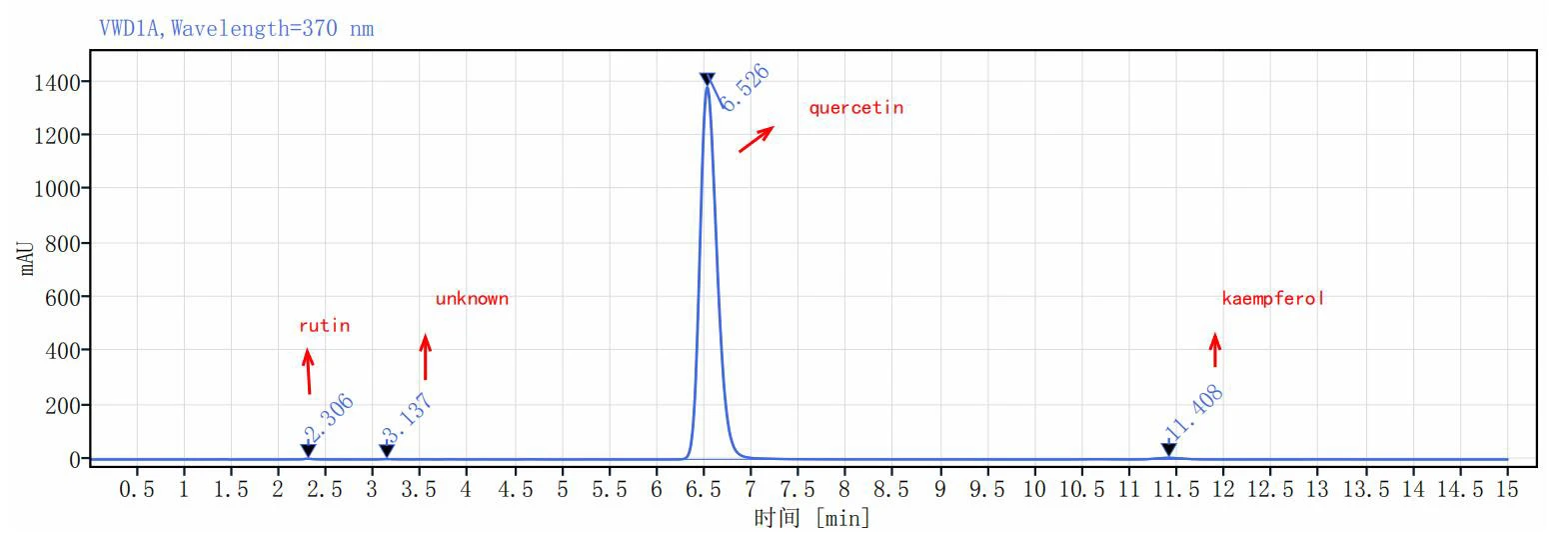
The Chromatogram of Quercetin
Where to buy quercetin powder?