

Mulberry Leaf as Source: Why It's Ideal for Sodium Copper Chlorophyllin Production
1. High Chlorophyll Content: A Core Advantage of Mulberry Leaf Raw Material
Sodium copper chlorophyllin, a water-soluble and highly stable derivative of natural chlorophyll, has gained significant traction in global industries, with mulberry leaf extract emerging as a premium and sustainable source.
Mulberry leaves stand out as an ideal raw material due to their high chlorophyll content, typically ranging from 1.2-2.0 mg/g dry weight. This concentration is comparable to or even higher than traditional sources like alfalfa, laying a solid foundation for efficient extraction.
2. Sustainability & Cost-Effectiveness of Mulberry Leaf Byproducts
A key advantage of mulberry leaves is their sustainability. As a byproduct of sericulture, they eliminate the need for dedicated cultivation, significantly reducing production costs. This byproduct utilization also minimizes environmental impact, aligning with global sustainable development trends.
3. Strong Adaptability & Purity of Mulberry Tree Cultivation
Additionally, mulberry trees exhibit strong adaptability to diverse climates, from temperate to subtropical regions. They are also less prone to pests and diseases, reducing pesticide usage and ensuring the raw material's purity with fewer harmful impurities like heavy metals.
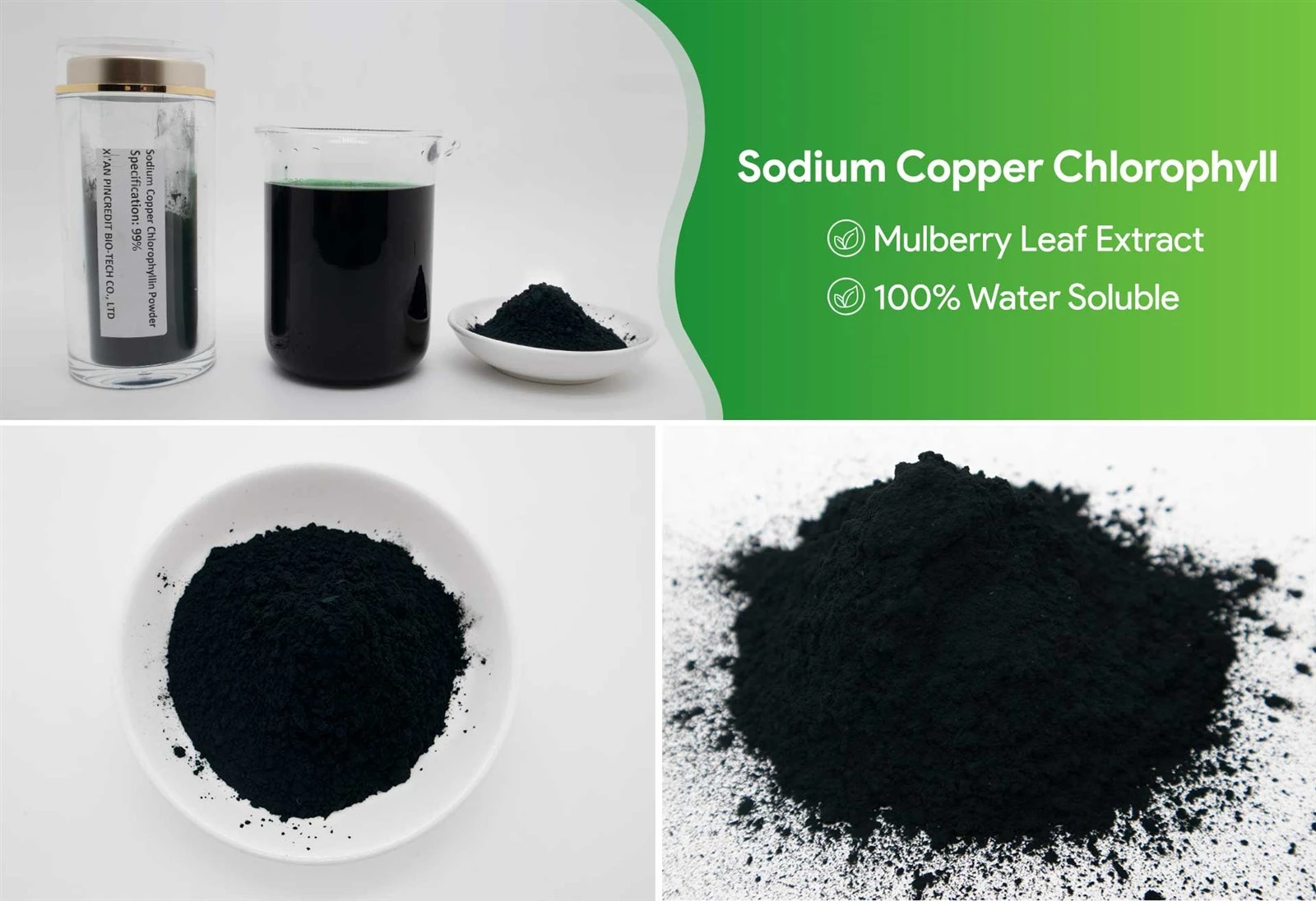
Systematic Preparation Process of Sodium Copper Chlorophyllin
Step 1: Pretreatment & Crude Chlorophyll Extraction
First, mulberry leaves undergo pretreatment: they are cleaned, dried, and crushed to increase surface area. This is followed by solvent extraction-commonly using ethanol or acetone-to isolate crude chlorophyll from the leaf material.
Step 2: Saponification for Water-Solubility Enhancement
Third, copper ion substitution takes place: copper sulfate is added to replace the magnesium ion in the chlorophyll structure. This substitution significantly enhances the compound's stability and strengthens its bioactive properties.
Step 4: Purification & Advanced Extraction Technologies
Finally, purification processes such as filtration, concentration, and crystallization are applied to obtain high-purity sodium copper chlorophyllin (purity ≥98%). Advanced technologies like supercritical CO₂ extraction are also increasingly adopted to reduce solvent residues and improve product safety, aligning with global "clean label" trends.
Second, saponification is conducted by adding an alkaline solution (e.g., sodium hydroxide) to the crude extract. This reaction breaks down chlorophyll into water-soluble sodium chlorophyllinate, a critical step for improving the compound's applicability in water-based products.
Step 3: Copper Ion Substitution for Stability & Bioactivity
Third, copper ion substitution takes place: copper sulfate is added to replace the magnesium ion in the chlorophyll structure. This substitution significantly enhances the compound's stability and strengthens its bioactive properties.
Step 4: Purification & Advanced Extraction Technologies
Finally, purification processes such as filtration, concentration, and crystallization are applied to obtain high-purity sodium copper chlorophyllin (purity ≥98%). Advanced technologies like supercritical CO₂ extraction are also increasingly adopted to reduce solvent residues and improve product safety, aligning with global "clean label" trends.
Applications of Mulberry Leaf-Derived Sodium Copper Chlorophyllin
1. Application in Food Industry: Natural Green Colorant
In the food industry, mulberry leaf-derived sodium copper chlorophyllin is primarily used as a natural green colorant. It addresses the growing consumer demand for clean, natural food aesthetics by imparting a vivid, authentic green hue.
Its application scope in food is extensive, covering beverages (such as green tea drinks and fruit smoothies), baked goods, candies, frozen desserts, and canned vegetables. This versatility is attributed to its excellent water solubility, which integrates well with water-based food systems.
Another critical advantage for food applications is its strong heat stability-it remains effective even at 120℃ for 30 minutes, making it suitable for various high-temperature food processing procedures.
2. Dietary Supplement Applications
Beyond coloring, mulberry leaf-derived sodium copper chlorophyllin retains the bioactive advantages of natural chlorophyll, including antioxidant and anti-inflammatory properties. These properties expand its application beyond the food industry into pharmaceuticals, dietary supplements, and personal care.
3. Cost Competitiveness vs. Traditional Source Products
Compared to products from traditional sources like alfalfa, mulberry leaf-derived sodium copper chlorophyllin has a more favorable cost structure. The byproduct nature of mulberry leaves avoids the additional expenses of dedicated raw material farming, enhancing its market competitiveness.
In the pharmaceutical field, its hematopoiesis-promoting effect helps improve conditions like iron deficiency anemia and leukopenia. This makes it a valuable ingredient in medications targeting blood health.
Its anti-inflammatory and antibacterial properties are also leveraged in topical formulations. Creams and ointments containing this compound are effective in treating skin ulcers, burns, scalds, and frostbite, aiding in skin repair and recovery.
4. Regulatory Recognition & Market Feedback in Food Sector
Notably, it has obtained approval from major regulatory bodies including China's GB 2760-2024, the EU's EFSA, and the US FDA, which classifies it as a "Generally Recognized as Safe (GRAS)" ingredient. This strict regulatory recognition addresses the growing consumer demand for natural, non-toxic food additives, driving its annual adoption growth rate of 9.5% in the food sector. In practical applications, many well-known beverage brands have replaced synthetic green dyes with mulberry leaf-derived sodium copper chlorophyllin in their green tea and fruit juice products, gaining positive market feedback.
5. Sodium Copper Chlorophyllin in Cosmetics: Clean Beauty Applications
1) Consumer Demand Drivers in Clean Beauty
The cosmetic industry has enthusiastically embraced mulberry leaf-derived sodium copper chlorophyllin, particularly amid the global "clean beauty" movement. Consumers' growing preference for natural, skin-friendly ingredients has made this compound a desirable addition to various cosmetic and personal care products.
2) Additional Application: Internal Deodorant for Quality of Life Improvement
As an internal deodorant, mulberry leaf-derived sodium copper chlorophyllin effectively reduces odors associated with halitosis (bad breath), colostomy. This significantly enhances the quality of life for patients with these conditions.
3) Dietary Supplement Formulations & Clinical Efficacy
In dietary supplements, it is commonly formulated into capsules or tablets focused on liver health and antioxidant support. Clinical data confirms that regular intake can reduce oxidative stress markers in the body by up to 30% within 8-12 weeks, validating its bioactive efficacy.
In cosmetics, it is widely incorporated into creams, lotions, serums, and oral care products. Its ability to protect the skin from UV-induced free radical damage, accelerate wound healing, and strengthen the skin barrier aligns perfectly with clean beauty trends.
The adoption of this natural ingredient in cosmetics has contributed to the 23.5% annual growth rate of the natural plant-derived cosmetic ingredients market, reflecting strong consumer demand for safe, skin-friendly products.
Market Growth & Future Prospects of Mulberry Leaf-Derived Sodium Copper Chlorophyllin
1. Global & Chinese Market Growth Trends
The global mulberry leaf-derived sodium copper chlorophyllin industry is experiencing steady growth, with the Chinese market leading the expansion. From 2021 to 2025, the Chinese market achieved a CAGR of 11.2%, and it is projected to reach 980 million yuan by 2027.
2. Key Drivers of Industry Growth
Key drivers of this growth include the rising global demand for clean label ingredients, the sustainable and cost-effective nature of mulberry leaf sources, and continuous advancements in extraction technology that improve efficiency and product quality.
3. Emerging Applications: Animal Feed Sector
Emerging applications are also fueling market expansion, particularly in animal feed where it serves as a natural pigment and growth promoter. This opens up new revenue streams for the industry.
4. Eco-Friendly Advantage vs. Synthetic Alternatives
Compared to synthetic alternatives, mulberry leaf-derived sodium copper chlorophyllin has a lower carbon footprint, aligning with global environmental sustainability goals. This eco-friendly advantage further strengthens its market competitiveness in the long run.
5. Summary: Core Advantages & Future Outlook
In summary, mulberry leaf-derived sodium copper chlorophyllin combines sustainability, cost-effectiveness, and multiple bioactive properties. With its wide-ranging applications and strong regulatory recognition, it is poised to play an increasingly important role in the global natural ingredients market, driven by ongoing research and expanding demand across industries. Contact us now for free samples.