

What Exactly is Phycocyanin Powder?
Phycocyanin powder is derived from a unique class of photosynthetic pigments found predominantly in cyanobacteria, also known as blue - green algae, and certain types of red algae. This protein - bound pigment is not just an ordinary component of these organisms; it plays a crucial role in their survival and growth.
In the realm of algae, phycocyanin serves as an accessory pigment to chlorophyll. While chlorophyll is responsible for the primary absorption of light energy for photosynthesis, phycocyanin has the remarkable ability to absorb light in the orange-red spectrum (around 620-630 nm) that chlorophyll cannot efficiently capture. It then transfers this absorbed energy to chlorophyll, enhancing the overall photosynthetic efficiency of the algae. This makes phycocyanin an essential element in the complex machinery of photosynthesis within these aquatic organisms.
The extraction process of phycocyanin powder from algae is a multi-step procedure. First, the algae are harvested from their natural aquatic habitats or from large-scale cultivation ponds or bioreactors. Once collected, they are subjected to a series of mechanical and chemical treatments to break down the cell walls and release the phycocyanin-rich contents. These treatments are carefully calibrated to ensure the integrity of the phycocyanin molecule while separating it from other cellular components such as lipids, carbohydrates, and nucleic acids. The resulting extract is then purified through techniques like chromatography and filtration to obtain a high-purity phycocyanin powder.

Contact Us to Get Free Sample Now>>
The Distinctive Properties of Phycocyanin Powder
- Physical Properties
Phycocyanin powder typically presents as a fine, vivid blue-colored powder. This intense blue hue is a characteristic feature that makes it easily distinguishable and also contributes to its use as a natural colorant. In terms of solubility, phycocyanin shows good solubility in water. When added to an aqueous solution, it disperses relatively quickly, forming a clear to slightly turbid blue-colored solution depending on the concentration. This water-solubility is crucial for its applications in the food and beverage industry, as it allows for easy incorporation into various liquid-based products such as drinks, syrups, and dairy products. However, it has limited solubility in organic solvents like ethanol, methanol, and hexane. This insolubility in non-polar solvents is due to its polar nature, which is a result of its chemical composition that contains polar amino acid residues and hydrophilic groups within its structure.

- Chemical Properties
Chemically, phycocyanin is a complex protein-pigment conjugate. It consists of a protein moiety and a chromophore called phycocyanobilin. The phycocyanobilin is covalently attached to the protein through a thioether linkage. This unique chemical structure gives phycocyanin its characteristic light - absorbing properties. The protein part provides a stable framework for the chromophore, protecting it and ensuring its proper function in light-energy transfer during photosynthesis in the algae from which it is derived.
Regarding its stability, phycocyanin is relatively stable under certain conditions. It can maintain its structure and function within a specific pH range, usually between pH 6-8. Outside this range, especially in highly acidic or alkaline environments, the protein structure may start to denature, leading to a loss of its characteristic blue color and biological activity. For example, at a very low pH, the acidic protons can interact with the amino acid residues of the protein, disrupting the hydrogen bonds and electrostatic interactions that hold the protein in its native conformation. This results in the unfolding of the protein and the release of the phycocyanobilin chromophore, which may then undergo further chemical changes.
Temperature also plays a significant role in the stability of phycocyanin. It is generally stable at moderate temperatures, around 20-30°C. But when exposed to high temperatures, such as above 60°C, thermal denaturation can occur. The increased kinetic energy at high temperatures can break the non-covalent bonds within the protein, causing it to lose its three-dimensional structure and functionality. In addition, phycocyanin can react with certain oxidizing agents. Oxidation can lead to the modification of the amino acid residues in the protein or the chromophore, affecting its color and bioactivity. However, it also has antioxidant properties itself, which allows it to scavenge free radicals and protect other molecules from oxidation under appropriate conditions.
Diverse Applications of Phycocyanin Powder
- In the Food Industry
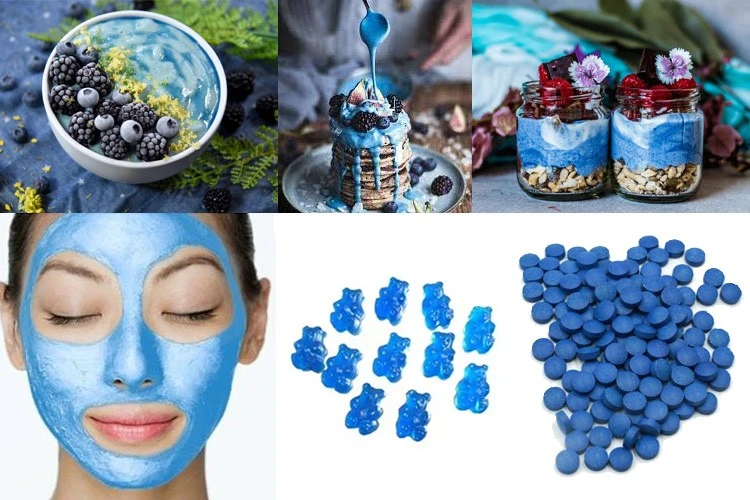
In the food industry, phycocyanin powder has emerged as a highly sought - after natural alternative to synthetic colorants. Its vivid blue color makes it an ideal choice for adding a visually appealing hue to a wide range of food products. For instance, in the beverage sector, it is commonly used to color bottled waters, energy drinks, and fruit-based beverages. A popular brand of artisanal lemonade has started incorporating phycocyanin powder to create a unique blue-tinted lemonade, which not only stands out on the supermarket shelves but also attracts health-conscious consumers who prefer natural ingredients.
In the realm of baked goods, phycocyanin powder can be used to color icings, frostings, and even the dough itself. Some high-end bakeries are now offering blue-colored macarons and cupcakes, where phycocyanin powder is used to achieve that vibrant blue color. This natural pigment is also finding its way into dairy products like yogurt and ice cream. A well - known organic yogurt brand has introduced a line of blue-colored yogurts, flavored with berries and colored with phycocyanin powder, targeting consumers who are interested in both natural and visually exciting food products.
One of the major advantages of using phycocyanin powder in the food industry is its natural origin. Consumers today are increasingly aware of the potential health risks associated with synthetic food colorings, such as allergic reactions and hyperactivity in children. Phycocyanin powder, being a natural pigment derived from algae, is free from such concerns. It is also generally recognized as safe (GRAS) by regulatory authorities in many countries, which gives food manufacturers the confidence to use it in their products. Additionally, it does not impart any off-flavors or odors to the food, ensuring that the taste profile of the product remains unchanged while enhancing its visual appeal.
- In the Healthcare Field
The pharmaceutical field has been showing great interest in phycocyanin powder due to its remarkable biological activities. Research has indicated that phycocyanin possesses strong antioxidant properties. Free radicals are unstable molecules that can cause oxidative stress in the body. Phycocyanin can scavenge these free radicals, protecting cells from oxidative damage.
Furthermore, phycocyanin has demonstrated anti-inflammatory properties. In in-vitro studies, phycocyanin has been shown to inhibit the production of pro-inflammatory cytokines, which are molecules that trigger the inflammatory response in the body.
- In the Cosmetic Realm
In the cosmetic industry, phycocyanin powder is making waves for its multiple beneficial properties. One of its key applications is in skin-whitening products. Melanin is the pigment responsible for skin color, and excessive production of melanin can lead to hyperpigmentation, such as dark spots and melasma. Studies have shown that phycocyanin can inhibit the activity of tyrosinase, the enzyme that plays a crucial role in melanin synthesis. As a result, it can help to lighten the skin tone and reduce the appearance of dark spots, making it a popular ingredient in high-end whitening creams and serums.
Phycocyanin also has excellent moisturizing properties. It can attract and retain water molecules, keeping the skin hydrated. This makes it an ideal ingredient for moisturizers, lotions, and facial masks. A well-known Korean skincare brand has launched a line of sheet masks containing phycocyanin, which claim to hydrate the skin deeply while also providing antioxidant protection. The blue color of the phycocyanin-infused mask also adds a unique and luxurious touch to the product.
Moreover, due to its antioxidant properties, phycocyanin can protect the skin from damage caused by environmental factors such as UV radiation, pollution, and free radicals. This helps to prevent premature aging of the skin, including the formation of wrinkles, fine lines, and loss of elasticity.
Promising Future Developments
In terms of applications, the future looks bright for phycocyanin powder. In the food industry, as consumers continue to demand natural and healthy products, the use of phycocyanin as a natural colorant and functional ingredient is expected to grow. It may find its way into more innovative food products. In the healthcare field, further research into the therapeutic potential of phycocyanin may lead to the development of nutraceuticals.
The cosmetic industry is also likely to see an increased use of phycocyanin. With the growing trend towards natural and sustainable cosmetics, phycocyanin's skin-beneficial properties make it an attractive ingredient. It may be incorporated into more advanced skincare products, such as serums and creams, where its antioxidant and skin-lightening properties can be further utilized. As the market for phycocyanin powder continues to expand, we can expect to see more product innovation, cost-reduction, and a broader range of applications in the coming years.