

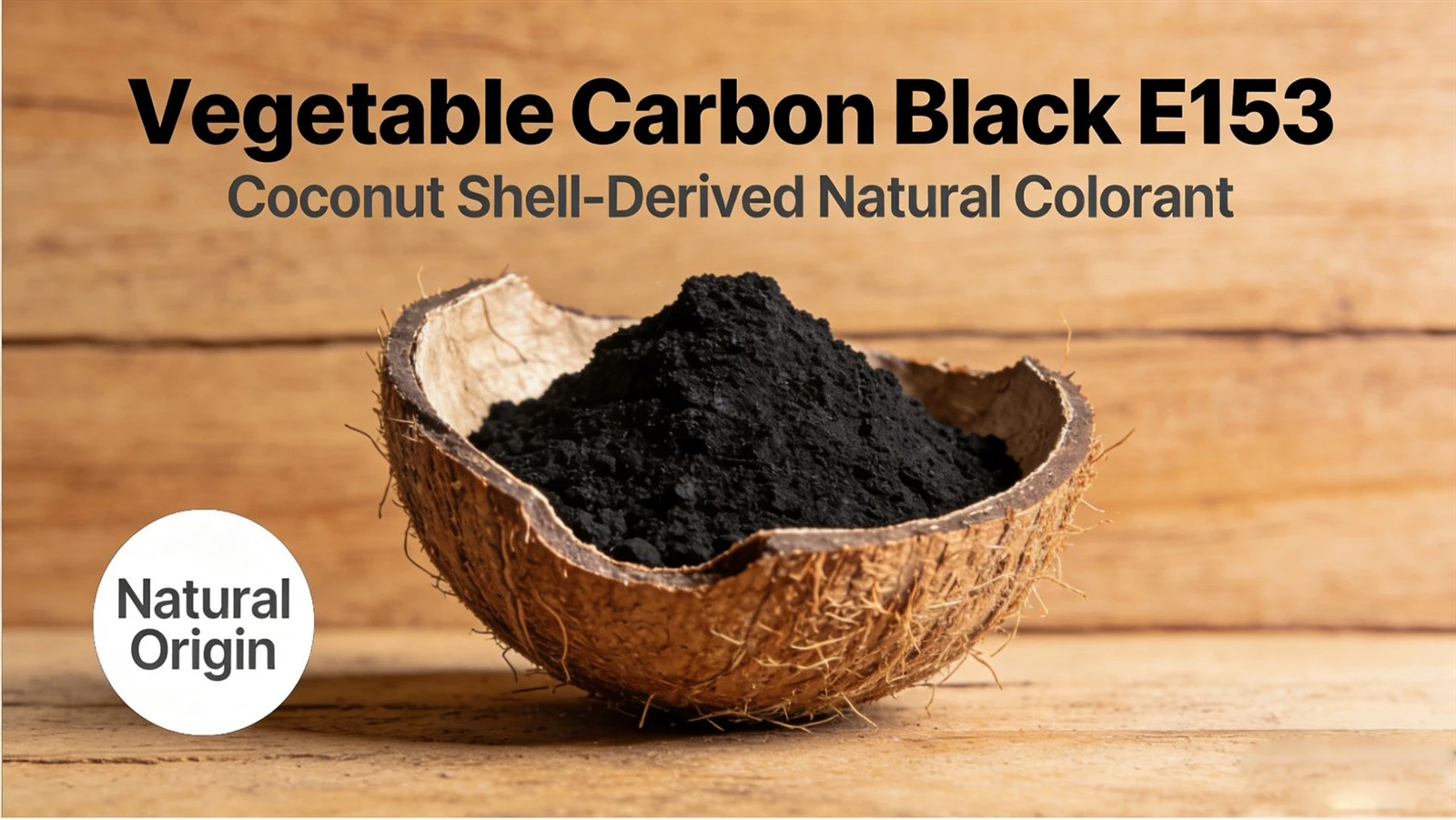
Vegetable Carbon Black E153, a natural colorant extracted from coconut shells, has become a staple in food, cosmetic, and industrial sectors due to its safety, sustainability, and versatile coloring properties. As consumers increasingly prioritize natural ingredients and regulatory bodies tighten standards for synthetic additives, this coconut shell charcoal powder is gaining traction as a reliable alternative to artificial black colorants.
What is Vegetable Carbon Black E153?
Vegetable Carbon Black E153 is a type of natural black pigment derived exclusively from coconut shell biomass. It is classified as a food-grade additive with the international numbering system (INS) code 153, distinguishing it from synthetic carbon black which is often produced from petroleum by-products. The coconut shell origin not only ensures its natural attributes but also contributes to its eco-friendly profile, as coconut shells are renewable agricultural waste, promoting circular economy practices.
The production of Coconut Shell Charcoal Powder follows a green and controlled process. Selected coconut shells are first cleaned and dried to remove impurities and moisture, then subjected to high-temperature carbonization under oxygen-limited conditions (typically 800-1200℃) . This process decomposes organic components in the coconut shells, leaving a high-purity amorphous carbon structure. The resulting charcoal is further refined, crushed, and sieved into fine powder, ensuring uniform particle size (usually 50-200 mesh) for optimal dispersion in end products . Unlike synthetic carbon black, the coconut shell-derived variant avoids toxic by-products, aligning with global sustainability goals.
International Compliance of E153
Compliance with international standards is a key advantage of Vegetable Carbon Black E153. It is officially recognized as a food additive (INS 153) by major regulatory bodies: the EU's EFSA sets strict limits for heavy metals (lead ≤5 mg/kg) and polycyclic aromatic hydrocarbons (PAHs, benzo(a)pyrene ≤0.25 μg/kg), while the US FDA 21 CFR 73.1400 defines its purity and application scope. In China, it adheres to GB 1886.246-2016 and GB 2760-2014, which specify maximum usage levels (e.g., 5.0 g/kg in candies and pastries, 1.5 g/kg in taro balls). These standards ensure its safety for human consumption and industrial use.
Key Applications of E153
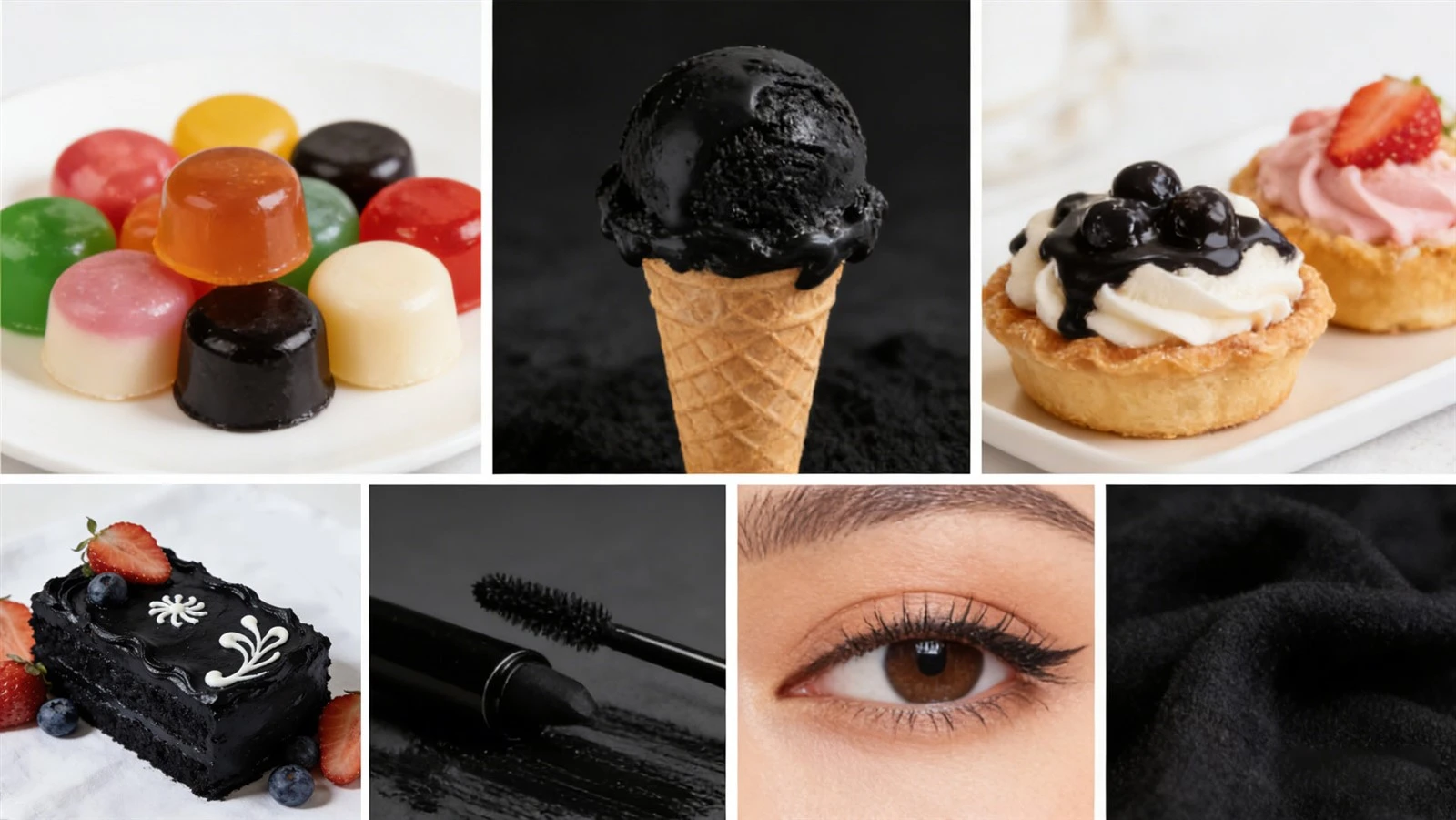
Its applications span multiple industries. In the food sector, it is widely used in candies, ice creams, pastries, and beverages to create an appealing black or dark hue, enhancing product visual appeal without altering taste. In cosmetics, it is added to lipsticks, eyeliners, and face masks for deep coloring and mild adsorption properties. Industrially, it serves as a natural dye for textiles (cotton, linen, etc.) and a coloring agent for plastics and rubbers, while its high specific surface area makes it effective in water purification and air filtration.
Market Outlook of Coconut Shell E153
The global market for Coconut Shell Vegetable Carbon Black is projected to grow steadily, driven by increasing demand in food and environmental applications. With a compound annual growth rate of over 8% in related coconut charcoal markets, innovations like supercritical CO₂ extraction technology are further improving its purity and functional properties. For businesses seeking natural, compliant, and sustainable black colorants, Vegetable Carbon Black E153 stands out as a high-value solution that meets both consumer expectations and regulatory requirements.