

In the rapidly evolving natural ingredients landscape, Phycocyanin Powder has emerged as one of the most sought‑after plant‑based pigments for manufacturers worldwide. Extracted from the microalgae Arthrospira platensis (Spirulina), this vibrant blue pigment‑protein complex delivers an intense, stable color while simultaneously offering scientifically validated antioxidant, anti‑inflammatory, and immune‑supporting properties-a combination of aesthetics and bioactivity that positions phycocyanin as a strategic ingredient for B2B buyers in the nutraceutical, functional food, beverage, cosmetic, and pharmaceutical industries [6†L6-L8].

Why Phycocyanin Powder Is Reshaping the Natural Colorant Market
The phycocyanin market is one of the fastest‑growing segments within the natural colorant industry. Valued at an estimated USD 899.1 million in 2025, the global phycocyanin market is projected to reach USD 1,768.7 million by 2035, demonstrating a robust compound annual growth rate (CAGR) of 8.9% between 2025 and 2035 [1†L28-L30][0†L28-L31]. The organic phycocyanin powder segment alone, valued at USD 32.6 million in 2025, is expected to reach USD 59 million by 2034, growing at a CAGR of 7.7% [8†L11-L13].
Several interrelated factors are driving this exceptional growth trajectory:
Clean‑Label Movement & Regulatory Pressures: Consumer demand for natural, synthetic‑free ingredients is accelerating the phase‑out of artificial dyes. Major manufacturers, including Nestlé, are reformulating products with phycocyanin as a natural blue colorant in beverages and confections, aligning with global clean‑label strategies [10†L28-L31]. Natural and plant‑based colorants now dominate new product development, supported by the fact that the U.S. retail market for plant‑based foods reached USD 8.1 billion in 2024, highlighting the significant commercial landscape for natural colorants like phycocyanin [11†L24-L25].
Nutraceutical Demand as a Premium Driver: Nutraceutical and dietary supplement applications accounted for approximately 45% of global spirulina demand in 2025, where phycocyanin serves not merely as a colorant but as a functional bioactive with documented health benefits [7†L31-L34]. Phycocyanin is generating higher revenue per unit compared to raw spirulina biomass, positioning extraction as a key value driver, with B2B demand from food, beverage, and cosmetic manufacturers outpacing retail supplement consumption [7†L24-L31].
Emerging Applications in Regulated Segments: Phycocyanin's scope has expanded significantly into highly regulated categories. Q2‑2025 regulatory clearance by Japanese authorities for phycocyanin use in infant nutrition unlocked applications in baby cereals, follow‑on formulas, and child‑specific nutritional beverages [9†L33-L38]. Parry Nutraceuticals' launch of water‑soluble phycocyanin in early 2024 has aligned the ingredient with performance‑driven sports nutrition segments [9†L38-L42].
Industrial Scale‑Up & Supply Chain Maturation: Bluetec Naturals' large‑scale extraction facility in California (2024) and AlgaeBioTech's USD 25 million Series B funding have demonstrated industry confidence and advanced supply chain capabilities [9†L23-L31].
The Competitive Advantages of China's Manufacturing Ecosystem
China dominates global phycocyanin production, representing approximately 40% of global spirulina production in 2025, with leading producers leveraging proprietary extraction techniques to deliver high‑margin ingredients [7†L43-L48]. This dominance is built upon several key advantages that directly benefit global B2B buyers:
Superior Raw Material Sourcing: China's spirulina powder accounted for 52% of the global supply in 2025, with large‑scale production concentrated in Zhejiang, Shandong, and Jiangxi provinces-regions that benefit from favorable climatic conditions, low‑cost cultivation, and extensive production infrastructure [7†L16-L18].
Advanced Extraction Technology: The production of high‑purity phycocyanin requires sophisticated processing techniques including membrane filtration, enzymatic extraction, and controlled spray‑drying methods that preserve heat‑sensitive protein structures and maximize color yield [5†L12-L15].
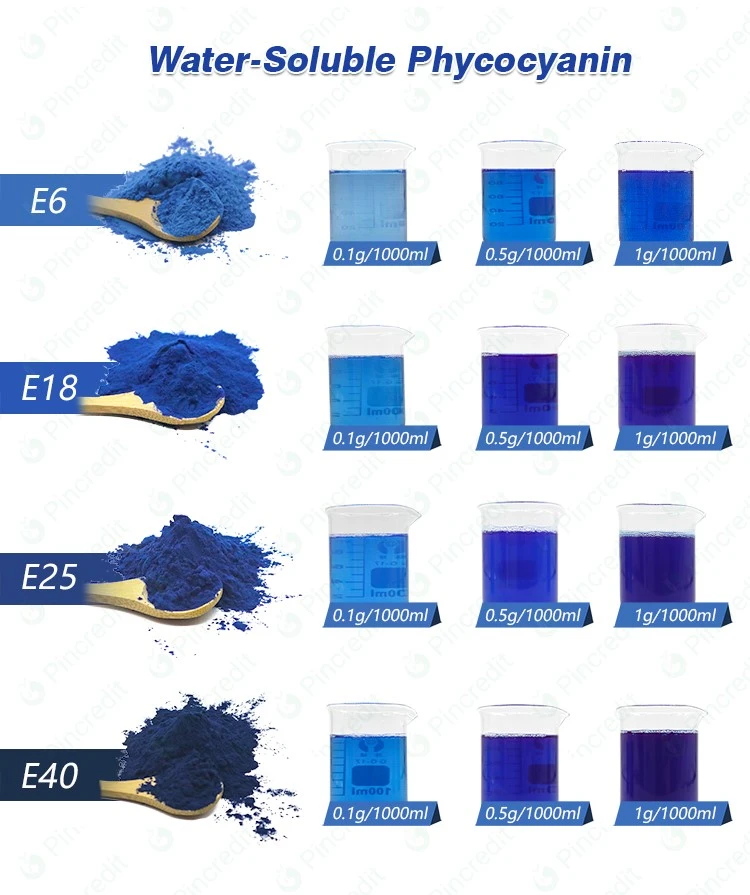
Scalability & Customization: Chinese manufacturers offer flexible production capacities ranging from R&D samples (1 kg) to multi‑ton bulk orders, with customizable specifications for color value (E18, E25, E30, E40, E60) and phycocyanin content.
Comprehensive Quality Certifications: Reputable Chinese suppliers maintain ISO 9001, FSSC 22000, HACCP, Kosher, Halal, and FDA‑registered manufacturing facilities, with full traceability and third‑party laboratory testing.
The Asia‑Pacific region accounts for over 40% of global spirulina production, with China and India serving as the backbone of global supply, while leading producers such as Cyanotech Corporation, Parry Nutraceuticals, Earthrise Nutritionals, DIC Corporation, and Algatech continue to expand premium extraction capacity globally [7†L48-L53].
The Science: Understanding Phycocyanin's Dual Value
Phycocyanin (CAS 11016‑15‑2) is a water‑soluble phycobiliprotein complex, recognized globally as the most unique active substance within spirulina's nutritional profile [5†L12-L15]. Two primary forms exist: C‑phycocyanin (predominantly found in cyanobacteria such as Spirulina) and R‑phycocyanin (found in red algae) [5†L18-L21].
Technical Classification: Color Value as the Standardized Quality Metric
Phycocyanin specifications are primarily defined by color value, measured by absorbance at 618 nm. Conventional commercial grades available include:
| Grade | Color Value (E1%1cm@618nm) | Phycocyanin Content | Primary Applications |
|---|---|---|---|
| E18 | ≥ 180 units | ~25–30% | Food & beverage, general coloring |
| E25 | ≥ 250 units | ~35–40% | Premium food & supplement applications |
| E30 | ≥ 300 units | ~45–50% | High‑grade nutraceuticals, cosmetics |
| E40 | ≥ 400 units | ~60–65% | Pharmaceutical, research, advanced formulations |
| E60 | ≥ 600 units | ~85–90% | Maximum purity, analytical grade |
A product with a color value of 180 units corresponds to a phycocyanin content of approximately 25–30%, while higher‑grade products achieve up to 60–90% purity for pharmaceutical and advanced nutraceutical applications [19†L28-L31].
Physicochemical Properties
| Parameter | Specification |
|---|---|
| Appearance | Vivid blue fine powder |
| Solubility | Fully water‑soluble (pH‑dependent, optimal pH 5.0–8.0) |
| Fluorescence | Emits red fluorescence at ~650 nm (lex 620 nm) |
| pH Stability | Stable between pH 5.0–8.0 |
| Temperature Stability | Optimal at ≤ 60°C; denatures > 70°C |
| Protein Content | Typically ≥ 65% |
| Molecular Weight | C‑phycocyanin: ~40 kDa (αβ monomers) |
| Aggregation State | Trimer (αβ)₃ in solution |
Bioactive Potential
Phycocyanin exhibits multiple documented biological activities, making it a functional ingredient, not merely a colorant:
Antioxidant Activity: Phycocyanin scavenges free radicals and reduces oxidative stress. Research demonstrates that C‑phycocyanin treatment enhances the antioxidant defense system, preventing oxidative stress [12†L22-L24].
Anti‑Inflammatory Action: Phycocyanin downregulates pro‑inflammatory cytokines, including TNF‑α, IL‑6, and IL‑1β, while upregulating anti‑inflammatory mediators, reducing systemic inflammation [12†L22-L24][13†L13-L14].
Immunomodulatory Effects: Phycocyanin enhances natural killer cell activity and supports immune system balance through macrophage activation and cytokine modulation [2†L20-L22].
Anti‑Cancer Potential: Phycocyanin has demonstrated antitumor properties through apoptosis induction and inhibition of cancer cell proliferation. Studies have shown downregulation of vimentin, fibronectin, and collagen expression, along with suppression of epithelial‑mesenchymal transition in cancer cell lines [2†L46-L49].
Tissue Protection: C‑phycocyanin has been shown to prevent ovarian hyperstimulation syndrome (OHSS) by reducing VEGF‑mediated vascular permeability and ovarian inflammation, improving ovarian reserve and oocyte quality in reproductive health applications [13†L28-L32]. Phycocyanin improved embryo development and litter size in OHSS models while showing no adverse offspring effects [13†L27-L29].
This multipronged profile enables formulators to build products where the same ingredient simultaneously delivers visual appeal and evidence‑based health benefits-increasing formulation efficiency and consumer appeal.
Technical Specifications & Quality Standards for Global Compliance
Key Specifications (Food Grade)
| Parameter | Specification | Test Method |
|---|---|---|
| Appearance | Blue fine powder | Visual |
| Odor & Taste | Characteristic | Organoleptic |
| Color Value (E1%1cm@618nm) | 180–600+ units (E18 to E60) | Spectrophotometry |
| Phycocyanin Content | 25–90% (customizable) | UV‑Vis / HPLC |
| Loss on Drying | ≤ 5.0–7.0% | USP <731> / Gravimetric |
| pH (1% solution) | 6.0–8.0 | pH meter |
| Total Plate Count | ≤ 1,000–10,000 CFU/g | ISO 4833 |
| Yeast & Mold | ≤ 100 CFU/g | ISO 21527 |
| E. coli | Negative/25g | USP <62> |
| Salmonella | Negative/25g | USP <62> |
Heavy Metal Limits
| Metal | Limit | Detection Method |
|---|---|---|
| Lead (Pb) | ≤ 1.0 ppm | ICP‑MS / AAS |
| Arsenic (As) | ≤ 1.0 ppm | ICP‑MS / AAS |
| Cadmium (Cd) | ≤ 1.0 ppm | ICP‑MS / AAS |
| Mercury (Hg) | ≤ 0.1 ppm | ICP‑MS / AAS |
Cyanotoxin & Microcystin Testing
| Contaminant | Limit |
|---|---|
| Microcystins | ≤ 1 μg/g |
| Saxitoxins | ≤ 3 μg/g |
| Anatoxin‑a | ≤ 3 μg/g |
| Cylindrospermopsins | ≤ 15 μg/g |
Stability Enhancement
Phycocyanin's natural sensitivity to light and heat presents a formulation challenge; however, the adoption of advanced stabilizers and encapsulation technologies (e.g., trehalose, sodium citrate as carriers, or liposome encapsulation) has significantly enhanced its thermal resilience. A proprietary nanoliposome encapsulation method for phycocyanin achieved a high encapsulation efficiency of 90.6% for cordycepin and 87.1% for adenosine, along with enhanced antioxidant and anticancer activity [2†L6-L8]. These improvements have successfully reduced degradation from approximately 87% in unstabilized formulations to as low as 30% over 12 weeks in sweetened solutions stored at 4 °C, dramatically extending the shelf life and utility of the pigment in commercial liquid applications [16†L14-L20].
Global Applications Across Industries
Phycocyanin serves as a true cross‑functional ingredient, creating value across multiple high‑growth market categories simultaneously.
1. Food & Beverage Industry
Natural Blue Colorant: Confectionery (gummies, hard candies, toffees), ice cream and frozen desserts, plant‑based dairy alternatives, beverages (smoothies, soft drinks, spirits), bakery coatings and icings, and cereal products [4†L39-L43][21†L12-L17].
Color Blending: Mixed with turmeric (yellow) to create various shades of green, or with red/purple pigments for broader color palettes.
Functional Foods: Incorporated into protein bars, healthy snacks, and sports nutrition products for color enhancement combined with antioxidant properties.
Regulatory Status: Phycocyanin passed GRAS (Generally Recognized as Safe) in the United States in 2012 and can be used as a food ingredient in all foods and dietary supplements at levels up to a maximum of 250 mg per serving (except infant formula) [19†L35-L39]. The European Union permits phycocyanin as a natural food colorant, aligning with the clean‑label movement.
2. Nutraceuticals & Dietary Supplements
Superfood Blends: Added to green powders, smoothie mixes, and health shots for a potent nutrient boost [21†L7-L9].
Capsules & Tablets: Encapsulated as a concentrated supplement leveraging antioxidant, anti‑inflammatory, and immune‑supporting properties [21†L10-L12].
Functional Health Products: Targeted formulations for immune support, energy enhancement, and overall wellness.
3. Cosmetics & Personal Care
Skincare Products: Featured in serums, creams, and masks for antioxidant benefits that help protect the skin from environmental damage and premature aging [21†L17-L20].
Natural Colorant: Used in soaps, bath bombs, eyeshadows, lip products, and lotions to achieve natural blue hues.
4. Animal Feed & Pet Food
Aquaculture Feed: Natural pigment for salmonids and ornamental fish, replacing synthetic alternatives while providing antioxidant protection.
Pet Food: Premium natural coloring for pet treats and complete diets.
5. Biotechnology & Diagnostics
Fluorescent Probe: Utilized in flow cytometry and immunoassays for its natural red fluorescence properties [6†L39-L41].
Research Reagent: Analytical and high‑purity grades (E60+) for life sciences research.
6. Aquaculture Feed & Shrimp Farming
Phycocyanin is utilized as a natural pigment in aquaculture feed for salmonids, shrimp, and ornamental fish, replacing synthetic alternatives while simultaneously delivering dietary antioxidant protection to farmed species, improving both appearance and health.
Advanced Manufacturing Expertise: From Spirulina to Finished Powder
The production of premium phycocyanin powder involves a multi‑stage, technically sophisticated process:
Certified Cultivation: Spirulina cultivation in controlled, GMP‑compliant photobioreactor systems using filtered water, ensuring maximum phycocyanin yield and minimal contamination risk.
Cell Disruption & Extraction: Water‑based extraction using advanced cell disruption methods to release phycobiliproteins, followed by membrane filtration and chromatographic purification to isolate high‑purity C‑phycocyanin [5†L12-L15].
Low‑Temperature Spray‑Drying: Gentle drying (typically below 60 °C) to preserve protein structure and color integrity, with carriers (trehalose, sodium citrate) added as stabilizers [14†L35-L36].
Quality Control (QC) Laboratory: In‑house HPLC and UV‑Vis testing systems combined with third‑party laboratory verification for heavy metals and cyanotoxin testing. Reputable suppliers provide comprehensive Certificates of Analysis (COA) with every batch, including full metal and toxicity panels [9†L24-L27].
Global Supplier & Logistics Solutions for B2B Buyers
As a specialized supplier of premium phycocyanin powder, we provide complete B2B solutions tailored to the manufacturing needs of the food, beverage, nutraceutical, and cosmetic industries worldwide. Our vertically integrated manufacturing is complemented by:
Full Quality Certification Suite: ISO 9001, FSSC 22000, HACCP, GMP, Kosher, Halal, and Non‑GMO certifications available.
Product Grade Availability: Food grade (E18‑E25), premium grade (E30‑E40), and cosmetic/analytical grade (E60+), all supported by comprehensive Certificates of Analysis (COA).
Flexible MOQ & Sample Policy: Low minimum order quantities (starting at 1 kg) for R&D evaluation, with free R&D sample sizes of 100–500 g available (buyer covers shipping only) [18†L23-L24].
Competitive Bulk Pricing: Direct manufacturer pricing with tiered volume discounts.
Scalable Production Capacity: From R&D samples to full container orders (≥ 500 kg), with support for mixed‑container shipments combining multiple ingredients [18†L20-L22].
Global Logistics Network: Temperature‑controlled shipping, comprehensive export documentation (COA, MSDS, Certificate of Origin, phytosanitary certificates), FDA‑registered facility, and dedicated customs clearance support.
Storage & Handling Best Practices for Formulators
| Parameter | Recommendation |
|---|---|
| Storage Temperature | 15–25 °C (59–77 °F), cool and dry |
| Light Exposure | Protect from direct sunlight; use light‑resistant containers |
| Moisture Control | Store in tightly sealed packaging; phycocyanin is hygroscopic |
| Shelf Life | 24–36 months from date of manufacture in original sealed packaging |
| Formulation Tips | Add during final processing stages; avoid high‑temperature (> 70 °C) or extended heat exposure; use chelating agents (e.g., EDTA) or natural stabilizers to enhance long‑term stability in liquid applications [21†L23-L27] |
Your Next Step: Partnering with a Trusted Global Supplier
The phycocyanin market is poised for significant expansion, driven by regulatory pressures against synthetic dyes, consumer demand for clean‑label products, and mounting scientific evidence supporting phycocyanin's functional health benefits. As the global natural blue pigment market continues to shift away from synthetics (such as Brilliant Blue FCF) toward plant‑based alternatives, manufacturers who incorporate phycocyanin into new product development will capture key competitive advantages.We invite B2B buyers, procurement managers, and brand owners to collaborate for premium, compliant, and sustainable phycocyanin solutions.
Request product samples for R&D evaluation
Receive comprehensive technical dossiers and batch‑specific COA
Discuss custom grade, particle size, and packaging requirements
Obtain competitive bulk pricing based on volume
Schedule a technical consultation for formulation support

Partner with us to deliver science‑backed, premium phycocyanin solutions to your customers worldwide.
SEO Keywords: Phycocyanin Powder B2B, Natural Blue Colorant Supplier, Spirulina Extract Phycocyanin, C‑Phycocyanin Bulk Powder, Clean Label Food Coloring, Natural Antioxidant Ingredient, Vegan Blue Pigment, Phycocyanin Manufacturer China, Nutraceutical Blue Colorant, Cosmetic Grade Phycocyanin, Water Soluble Natural Blue, Phycocyanin E25 E40 Wholesale, High Purity Phycobiliprotein.