

What Is Sodium Copper Chlorophyllin?
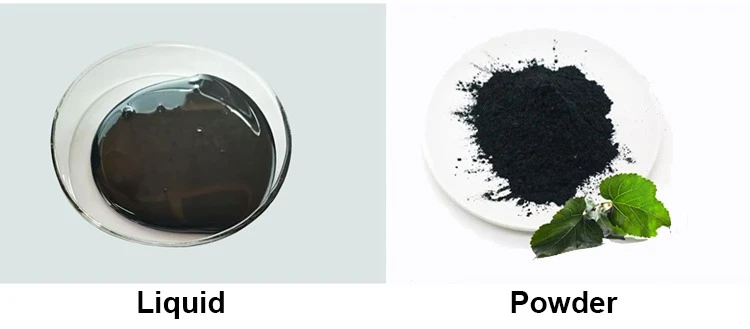
Sodium copper chlorophyllin is a dark green powder made from natural green plant tissues, such as silkworm feces, clover, alfalfa, bamboo and other leaves. It is extracted with organic solvents such as methanol, ethanol, and petroleum ether. The magnesium ions in the center of chlorophyll are replaced by copper ions, and at the same time, it is saponified by alkali, and the carboxyl group formed after removing the methyl and phytol groups becomes a disodium salt. Therefore, sodium copper chlorophyllin is a semi-synthetic pigment. The chlorophyll series pigments with similar structures and production principles include sodium iron chlorophyllin, sodium zinc chlorophyllin, etc.
What is the main use of sodium copper chlorophyllin?
1. Food addition.
Studies on bioactive substances in plant foods have shown that an increase in the consumption of fruits and vegetables is closely related to a decline in diseases such as cardiovascular disease. Sodium copper chlorophyllin is a natural bioactive substance. Metalloporphyrin, as a chlorophyll derivative, is a unique one among all natural pigments and has a wide range of applications.
Since natural chlorophyll is easily decomposed by heat, light, acid, and alkali, and is insoluble in water, its application is limited. Therefore, the structure of natural chlorophyll is modified into a stable metalloporphyrin structure, and the application field of metalloporphyrins continues to expand and attracts much attention. As a metalloporphyrin, sodium copper chlorophyllin has high stability. Metalloporphyrins are widely used in food additives, cosmetic additives, colorants, photoelectric conversion materials and other fields. Sodium copper chlorophyllin is converted from chlorophyll. Natural chlorophyll has two structures, which makes its sodium copper salt have a more complex composition and structure. In practice, only using molecular formulas to represent sodium copper salts has its shortcomings compared with its wide application. Sodium copper chlorophyllin, as a metalloporphyrin, has received special attention.
2. For textiles.
With the strengthening of people's environmental awareness and increasing attention to health, the negative impact of synthetic dyes used in textile dyeing on human health and the ecological environment has received more and more attention. Using pollution-free green natural dyes to dye textiles has become a research direction for many scholars. There are few natural dyes that can dye green, and copper sodium chlorophyllin is a food-grade green pigment and a natural chlorophyll derivative. The extracted chlorophyll can be saponified, copper-plated and refined. Copper sodium chlorophyllin is a metalloporphyrin with high stability. It is a dark green powder with a slight metallic luster.
3. For cosmetics.
Sodium copper chlorophyllin can be added to cosmetics as a colorant. Sodium copper chlorophyllin is a dark green powder with no or slight odor. The aqueous solution is transparent emerald green, which deepens with increasing concentration. It is light-resistant, heat-resistant and stable. The pH value of 1% solution is 9.5~10.2. When the pH value is lower than 6.5, calcium will precipitate and is slightly soluble in ethanol. It is easy to precipitate in acidic beverages, and its light resistance is stronger than chlorophyll. It decomposes when heated to above 110°C. Due to the stability and low toxicity of sodium copper chlorophyllin, it is widely used in the cosmetics industry.
4. Medical application.
The application research in the medical field has a bright future because it has no toxic side effects. The ointment made of sodium copper chlorophyllin can accelerate wound healing when treating wounds. It is used as an air freshener in daily life and clinical practice, especially in anti-cancer and anti-tumor research. It is reported that various data on the effects of sodium copper chlorophyllin on the human body are summarized in the form of detailed anti-tumor curves. The direct or indirect control mechanism of sodium copper chlorophyllin on tumors mainly includes the following aspects:
(1) complexing with planar aromatic carcinogens;
(2) controlling the activity of carcinogens;
(3) degrading carcinogens;
(4) removing free radicals and anti-oxidation.
Some researchers have studied the active components in sodium copper salts, and the results show that there are two types with larger contents, but it is not pointed out which structure is active. Since sodium copper chlorophyllin has the effect of removing free radicals, it is considered to be added to cigarette filters to remove various free radicals in smoke and reduce harm to the human body.
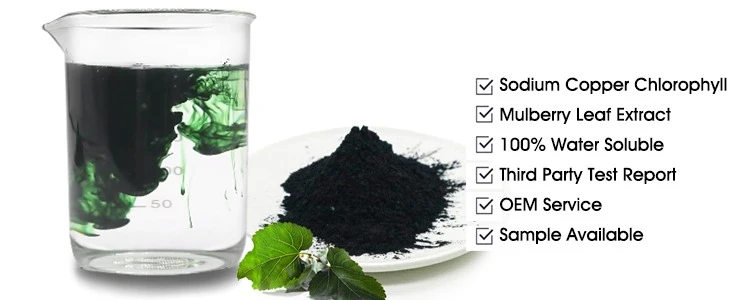
Xi'an Pincredit Bio-Tech Co.,Ltd. is a professional manufacturer and supplier of Sodium Copper Chlorophyllin.
For related products, please visit our website: https://www.nutritionaland.com/ or Contact Us For More Details>>