Overview of Lion's Mane Mushroom Extract Industry
Lion's mane mushroom extract has become one of the fastest‑growing natural functional ingredients within the global nutraceutical and functional food sector. Driven by the booming clean‑label movement, growing consumer interest in cognitive wellness, mental stress relief and immune maintenance, bulk lion's mane extract is highly sought‑after by formulators, supplement brands, food processors and cosmetic manufacturers all over the world. As a science‑backed mushroom raw material derived from Hericium erinaceus, this ingredient stands out from many common plant extracts. Global B2B purchasers keep increasing their procurement volume, and the whole industry shows promising long‑term growth potential for ingredient suppliers.
Basic Introduction of Lion's Mane Mushroom Extract
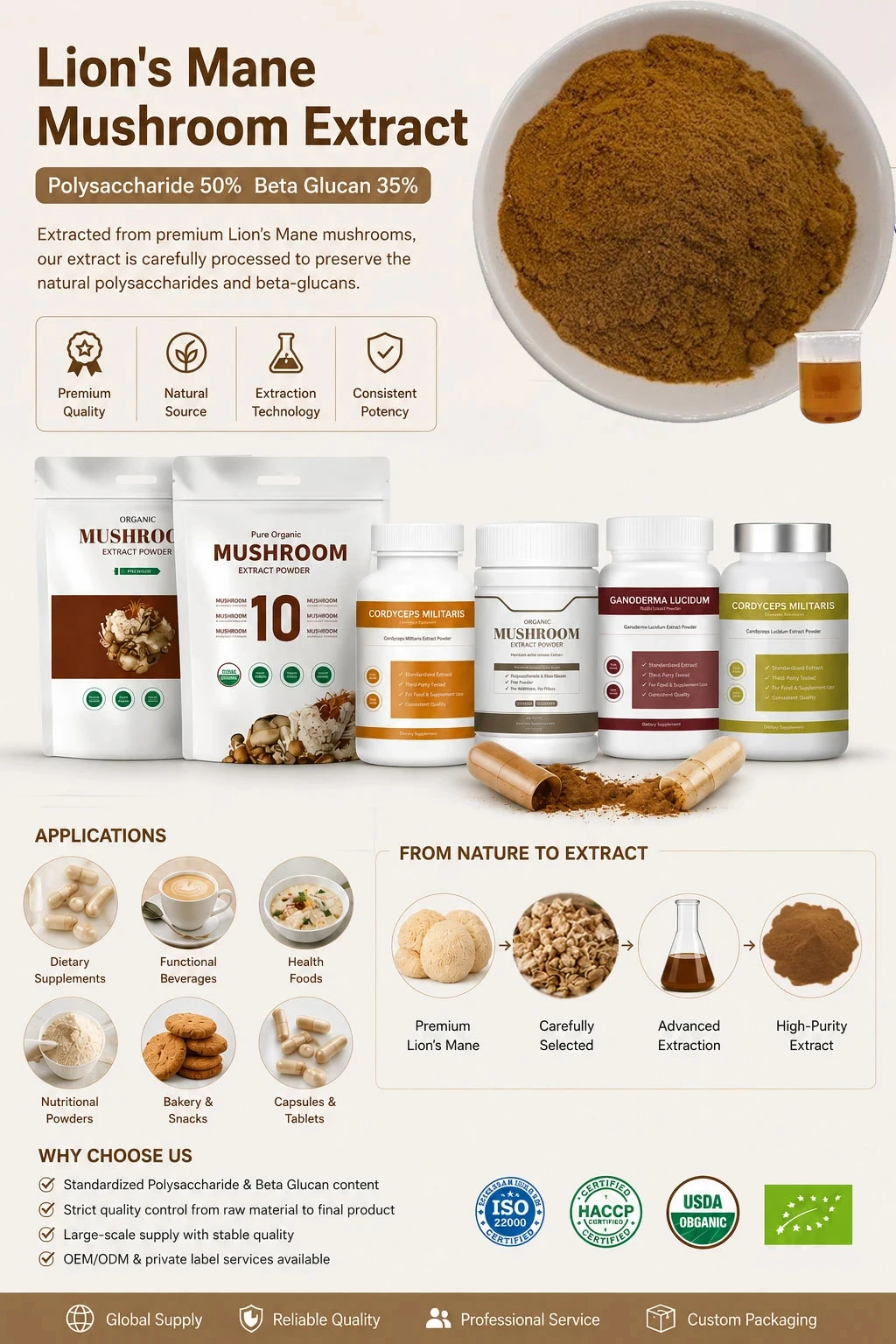
Lion's mane mushroom extract powder is a concentrated functional raw material produced from lion's mane fruiting bodies. Manufacturers apply water‑alcohol extraction, filtration, concentration and spray‑drying procedures to capture valuable bioactive substances while removing excess fibre and irrelevant impurities. It is critical to distinguish standardized lion's mane extract from simple lion's mane whole powder. Whole mushroom powder is merely ground dried mushroom, with low and inconsistent active content. By contrast, lion's mane mushroom extract delivers higher concentration, good water‑solubility and consistent batch‑to‑batch performance. These features make it suitable for commercial formula development rather than only household usage. Different commercial grades are available on the market, varying in polysaccharide content and marker compound levels to match diverse project requirements.
Core Bioactive Compounds of Lion's Mane Extract
The commercial value of lion's mane mushroom extract largely depends on its signature bioactive constituents, which are also key reference points for B2B buyers during supplier evaluation. Hericenones are mainly found in lion's mane fruiting bodies. They act as primary quality markers and are widely referenced in product datasheets for cognitive‑focused formulations. Erinacines are another well‑known group of compounds, frequently discussed in wellness‑related research documents. Lion's mane polysaccharides and beta‑glucans represent major water‑soluble fractions. They are heavily used in immune‑support oriented product lines. Besides these key markers, the extract also contains natural amino acids and trace minerals that bring extra nutritional benefits. Trusted suppliers will provide third‑party lab reports listing test values for these compounds, so buyers can avoid low‑grade bulk goods with vague specification data.
Global Market Development Trend of Lion's Mane Extract
The global bulk lion's mane mushroom extract market keeps expanding year by year, supported by several clear market drivers. First, consumers are shifting away from synthetic nootropic additives. More end‑users choose natural mushroom‑based ingredients for daily mental wellness, pushing supplement brands to adjust their formula portfolios. Second, application boundaries keep widening. Lion's mane extract is no longer limited to traditional pill‑style supplements. It appears in ready‑to‑drink beverages, functional snack bars, mushroom coffee blends and even clean‑beauty skincare goods. Third, international certification requirements become stricter. Downstream brands need bulk raw materials with ISO 22000, Kosher, Halal or organic certificates to enter North American, European and Oceania markets. This creates advantages for qualified Chinese biotech manufacturers with complete qualification systems. Fourth, small‑batch trial orders become popular. Many start‑up brands prefer 1 kg sample bags for formula testing before placing large‑volume 25 kg drum orders, which brings new business modes for raw material suppliers.
Main Industrial Application Fields of Bulk Lion's Mane Extract
Lion's mane mushroom extract covers multiple industrial sectors, and each field has distinct usage scenarios and formulation demands.
Dietary supplements and nutraceuticals remain the largest consumption area. Formulators fill lion's mane extract into vegetarian capsules and compressed tablets targeting daily mental support. It is also packed into single‑serve powder sachets for easy daily intake. Many brands create complex blends: lion's mane extract mixes with ashwagandha, rhodiola, reishi mushroom extract or cordyceps to build multi‑function wellness suites for stress and mental focus. Soft gummy supplements are another fast‑growing segment, where water‑soluble lion's mane extract works well for brain‑support gummy lines.
In functional food and beverage production, water‑soluble lion's mane extract powder fits plenty of finished‑product ideas. It can be blended into instant mushroom latte powder, herbal tea mixes, plant‑based ready‑to‑drink bottles, granola bars, energy bites and baked functional snacks. The ingredient carries a mild earthy flavour without strong bitter taste, so it will not ruin original food flavours. Some manufacturers also add small dosages into breakfast cereal mixes to upgrade nutritional positioning of ordinary consumer food.
Cosmetic and personal‑care industries adopt lion's mane polysaccharide extract for topical formulas. Formulators add it into facial serums, sheet mask essences and soothing toners. They take advantage of its antioxidant properties to develop clean‑label skin‑care items. It is worth noting that cosmetic‑grade lion's mane extract usually has different purity standards compared with supplement‑grade bulk material.
Animal nutrition is an emerging minor application. A small number of pet‑supplement brands add food‑grade lion's mane extract into pet powder treats, targeting pet brain and immune care for dogs and cats. This niche market is still in early development but attracts more attention from global pet‑product developers.
B2B Sourcing and Quality Control Standards
When sourcing bulk lion's mane mushroom extract, global B2B buyers need to pay attention to multiple practical quality points to prevent poor‑quality batches.
Raw material source confirmation is essential. Buyers should confirm whether goods are made from fruiting bodies or mycelium substrate. Fruiting‑body‑sourced lion's mane extract generally contains stable hericenones, which is preferred by most high‑end brands.
Check active‑substance specifications. Confirm polysaccharide percentage and marker compound test results from independent third‑party labs, instead of only accepting self‑reported data from suppliers.
Test solubility performance. Beverage, instant‑powder and gummy projects require water‑soluble grade; non‑water‑soluble material is only suitable for tablet and capsule formulas.
Review safety test reports, including heavy metal limits, aflatoxin content, microbial count and residual solvent inspection. These documents are necessary for customs clearance and finished‑product registration in many overseas regions.
Check available certifications. ISO22000 is the basic food‑safety standard; Kosher and Halal open access to specific regional markets; USDA organic or EU organic options serve premium‑positioned product lines.
Packaging options also matter. Standard bulk shipment uses food‑grade 25 kg drums, while aluminium‑foil 1 kg bags support lab trial and small‑batch production.
Common Industry Questions
What is the real gap between lion's mane whole powder and lion's mane extract? Whole lion's mane powder is milled dried mushroom. Active compound levels are low and unstable. It works for low‑demand casual food, yet cannot satisfy standardized supplement production. Lion's mane mushroom extract goes through extraction and concentration steps. Active markers get enriched, content indexes are clear, so it fits industrial formula development for branded finished goods.
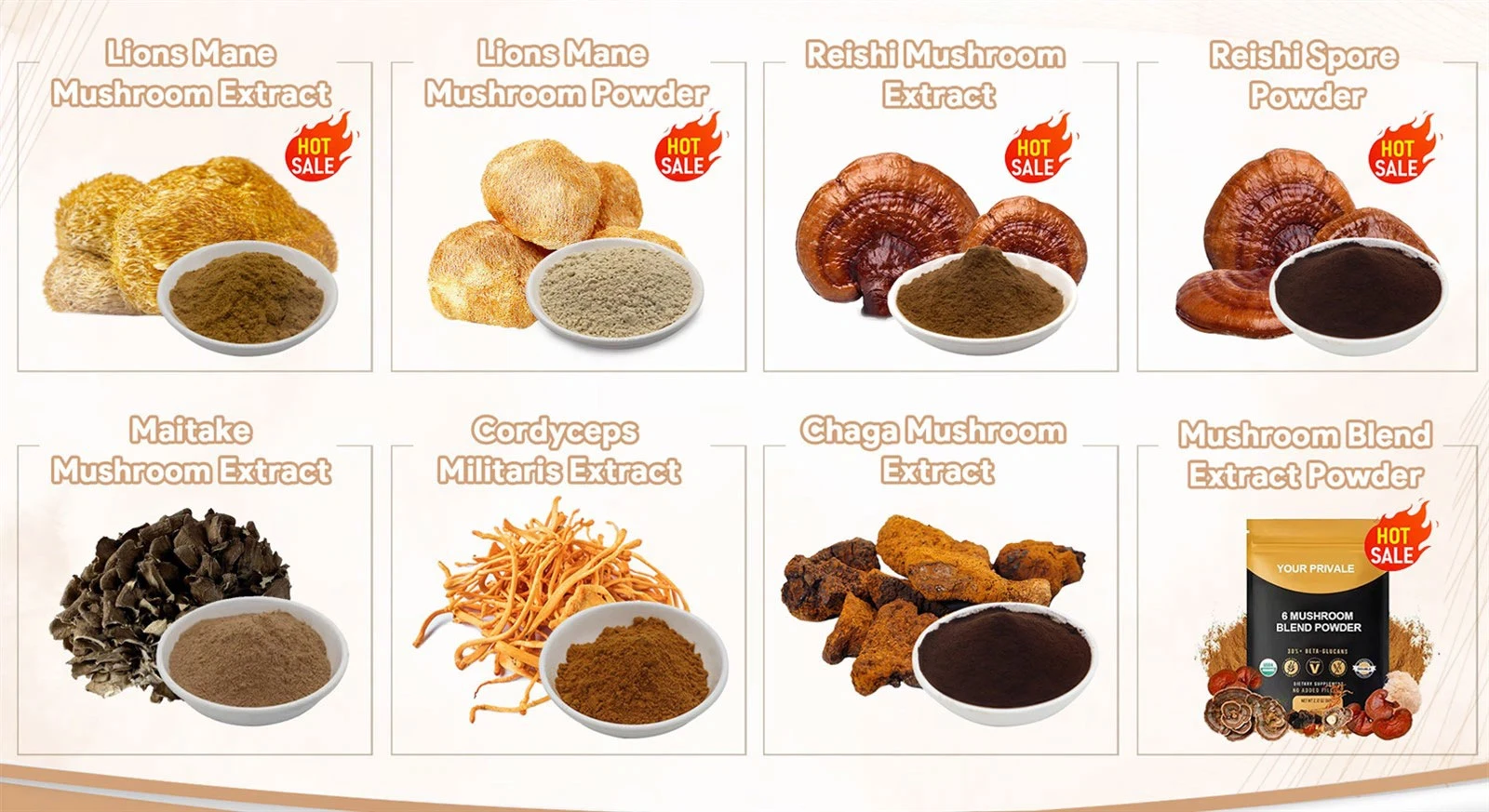
Can lion's mane extract be combined with other mushroom extracts? Yes, compound multi‑mushroom blends are very popular in international markets. Suppliers often mix lion's mane with reishi, chaga and cordyceps bulk extracts to supply one‑stop compound raw‑material solutions for downstream brands.
What potential risks should purchasers avoid? Some low‑cost products on the market use mycelium grown on grain substrate. Such goods have low hericenone content, even though polysaccharide figures may look attractive. Buyers should not judge quality by polysaccharide value alone and need to check fruiting‑body origin and hericenone test data.
Future Industry Development Prospects
Global demand for lion's mane mushroom extract will keep advancing in the coming years. As public awareness of natural cognitive wellness continues to rise, demand from supplement, functional‑food and clean‑beauty sectors will keep releasing. Product forms will become more diversified, and compound‑type mushroom raw materials will gain larger market share. Suppliers who can provide stable fruiting‑body‑based lion's mane extract, complete test documentation and full‑set international certifications will gain more cooperation chances with global brands. Overall, lion's mane mushroom extract maintains positive outlook within the global natural‑ingredient supply chain.
Contact us for free samples.