

In the global botanical extract market, curcumin-especially turmeric extract curcumin powder-stands out as a star product, favored by consumers, researchers, and industries alike for its natural origin, versatile applications, and proven health benefits. As the demand for natural, clean-label ingredients continues to surge-driven by growing health consciousness and a shift away from synthetic additives-turmeric extract curcumin powder has emerged as a high-potential botanical extract with widespread commercial value. This article comprehensively explores curcumin's current market status, natural sources, diverse applications, scientific management practices, and future prospects, while providing a detailed comparison with other popular botanical extracts to help readers gain a holistic understanding of turmeric extract curcumin powder and its value.
1. Current Status of Curcumin (Botanical Extract)
Curcumin, the primary bioactive polyphenol extracted from the rhizome of Curcuma longa L. (turmeric), is the core component of turmeric extract curcumin powder and has become one of the most widely traded botanical extracts globally. According to market research data, the global curcumin market-including turmeric extract curcumin powder-was valued at USD 678.4 million in 2025 and is projected to grow at a compound annual growth rate (CAGR) of 9.6%, reaching USD 1690.4 million by 2035. This robust growth is underpinned by rising consumer interest in natural anti-inflammatory and antioxidant agents, as well as the expanding role of turmeric extract curcumin powder in pharmaceuticals, dietary supplements, and cosmetics.
Currently, the curcumin market-with turmeric extract curcumin powder as a key product-is characterized by three key trends: First, growing demand for high-bioavailability products-pure curcumin and standard turmeric extract curcumin powder have low solubility and bioavailability (only 1-2% when taken orally), prompting manufacturers to develop nano-encapsulated, liposomal, and micellar formulations of turmeric extract curcumin powder to enhance absorption. Second,expansion of application fields-from traditional dietary supplements (where turmeric extract curcumin powder is widely used) to functional foods, cosmetics, and even agricultural applications. Third, regional market differentiation-North America is the fastest-growing major market with a CAGR of 10.9%, driven by strong consumer preference for clean-label ingredients like turmeric extract curcumin powder, while Asia Pacific dominates in production due to abundant turmeric cultivation resources for turmeric extract curcumin powder raw materials.
However, the curcumin market-including turmeric extract curcumin powder-also faces challenges: inconsistent product quality (variations in curcumin content and purity across turmeric extract curcumin powder products), high production costs of advanced formulations of turmeric extract curcumin powder, and regulatory differences across regions. For example, in the European Union, turmeric extract curcumin powder is classified as a food additive and dietary supplement ingredient, while in some Asian countries, it is also used in traditional medicine with specific regulatory requirements. Despite these challenges, the market's growth momentum remains strong, supported by ongoing research and technological advancements for turmeric extract curcumin powder.
2. Sources of Curcumin
2.1 Natural Sources
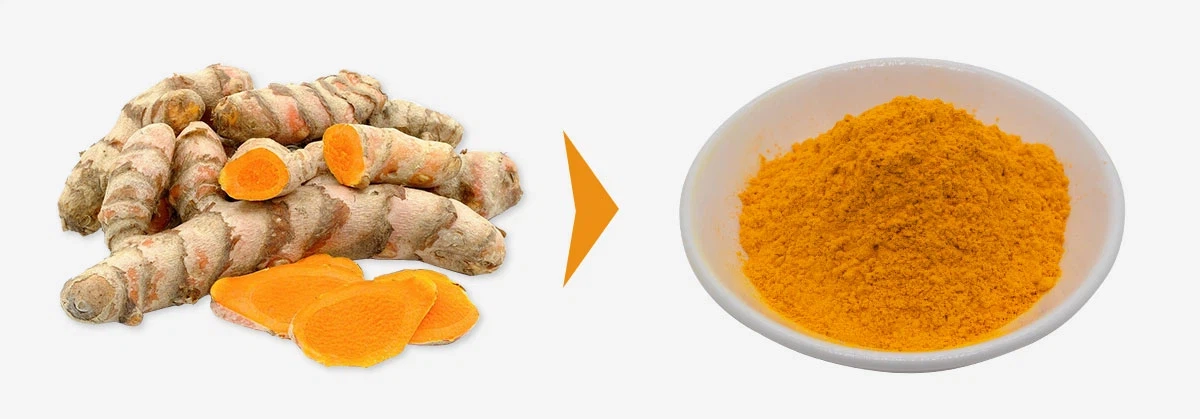
Curcumin is naturally found in the rhizome of turmeric (Curcuma longa L.), a perennial herb belonging to the Zingiberaceae family-this rhizome is the raw material for turmeric extract curcumin powder. Turmeric is native to South Asia (India, Bangladesh, and Sri Lanka) and has been cultivated for over 4,000 years for its medicinal and culinary uses, with its curcumin content (typically 3-5% in high-quality turmeric) making it ideal for producing turmeric extract curcumin powder. Today, it is widely grown in tropical and subtropical regions, including India, China, Indonesia, Thailand, and Brazil, with India accounting for more than 80% of global turmeric production-and thus the raw material supply for turmeric extract curcumin powder.
The curcumin content in turmeric rhizomes varies depending on the variety, growing conditions, and harvesting time-this directly impacts the quality of turmeric extract curcumin powder. Generally, high-quality turmeric contains 3-5% curcumin, along with other curcuminoids (demethoxycurcumin and bisdemethoxycurcumin) and volatile oils (such as turmerone) that enhance its biological activity. The rhizomes are harvested when they reach maturity (8-10 months after planting), dried, and ground into powder before undergoing extraction to obtain curcumin extract, which is then processed into turmeric extract curcumin powder for commercial use.
2.2 Extraction and Processing Sources
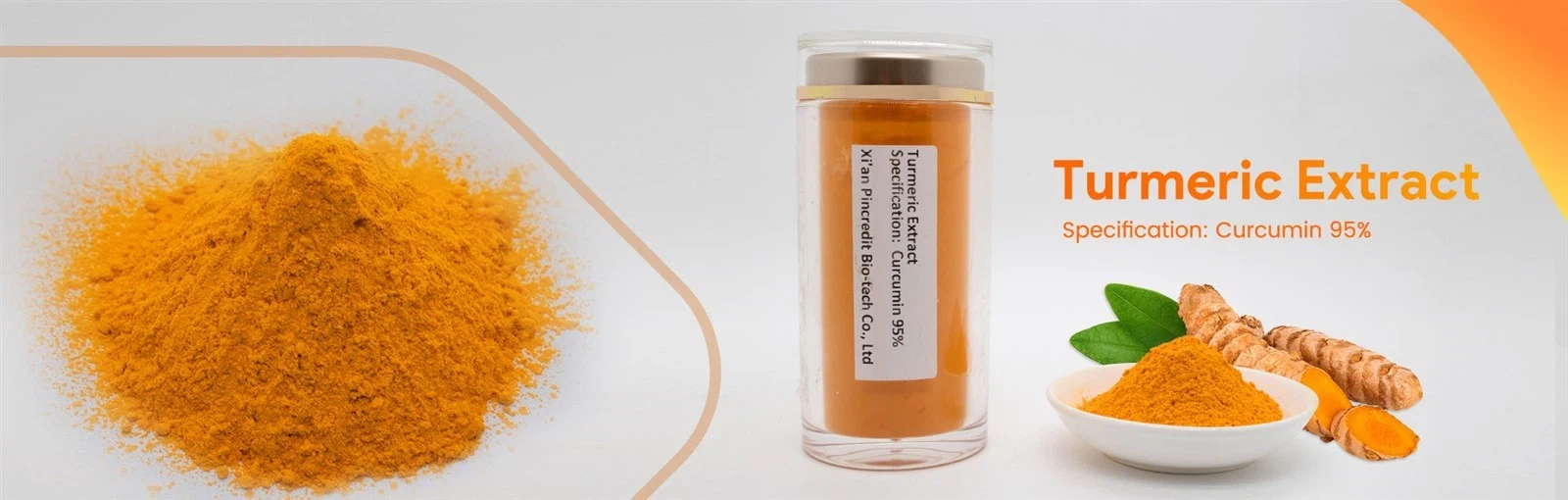
The industrial production of curcumin, particularly turmeric extract curcumin powder, primarily relies on solvent extraction, which is the most mature and widely used method. Common solvents include ethanol, acetone, and supercritical CO₂-supercritical CO₂ extraction is preferred for its environmental friendliness, ability to preserve bioactivity, and production of high-purity curcumin (up to 95% purity) for premium turmeric extract curcumin powder. After extraction, the solvent is removed, and the curcumin is purified, dried, and processed into different forms, with turmeric extract curcumin powder being the most popular form for dietary supplements and food applications.
In recent years, innovative extraction technologies have emerged, such as microwave-assisted extraction (MAE) and ultrasound-assisted extraction (UAE), which reduce extraction time, lower solvent usage, and improve curcumin yield-benefiting the production of high-quality turmeric extract curcumin powder. These technologies are gradually being adopted by manufacturers to enhance production efficiency, reduce environmental impact, and ensure consistent quality across turmeric extract curcumin powder products, aligning with global clean-label and sustainability trends.
3. Applications of Curcumin
Curcumin's versatility-especially in the form of turmeric extract curcumin powder-stems from its potent anti-inflammatory, antioxidant, antimicrobial, and neuroprotective properties, making it suitable for a wide range of applications across food, pharmaceuticals, cosmetics, and agriculture. Notably, turmeric extract curcumin powder's anti-inflammatory capacity is highly recognized, even outperforming some other popular natural ingredients, which further boosts its market demand.
3.1 Dietary Supplements
This is the largest application field of curcumin, with turmeric extract curcumin powder being the most commonly used form. Turmeric extract curcumin powder supplements are primarily used to support joint health, reduce inflammation, boost immune function, and promote heart and brain health. Due to its low bioavailability, most turmeric extract curcumin powder supplements are formulated with black pepper extract (piperine), which can increase curcumin absorption by up to 10 times, or with nano-encapsulation technology to enhance solubility and systemic absorption. Common supplement forms include capsules, tablets, and softgels containing turmeric extract curcumin powder, with dosages ranging from 500mg to 1000mg per serving.
3.2 Food and Beverages
Turmeric extract curcumin powder is widely used as a natural food additive, serving as both a colorant (imparting a bright yellow hue) and a functional ingredient-its dual role makes it highly sought-after in the food industry. It is added to beverages (juices, teas, functional drinks), snacks (protein bars, chips), and processed foods (sauces, soups, baked goods) to enhance nutritional value and appeal to health-conscious consumers. In the food industry, turmeric extract curcumin powder is favored for its clean-label status, as it is a natural alternative to synthetic colorants like tartrazine, aligning with the global shift toward natural food ingredients.
3.3 Cosmetics and Personal Care
Turmeric extract curcumin powder's antioxidant and anti-inflammatory properties make it a popular ingredient in cosmetics and personal care products. It is used in anti-aging creams, serums, face masks, and body lotions to reduce oxidative stress, minimize fine lines, brighten skin tone, and soothe skin irritation. Turmeric extract curcumin powder is also used as a natural colorant in cosmetics, in line with the global trend toward natural and organic beauty products. According to cosmetic safety assessments, turmeric extract curcumin powder is a safe ingredient when used within the limits specified in the Cosmetic Safety Technical Specification (2015 Edition).
3.4 Pharmaceuticals
Ongoing research has shown that curcumin, particularly in the form of high-purity turmeric extract curcumin powder, has potential therapeutic effects on a variety of diseases, including arthritis, cardiovascular diseases, neurodegenerative disorders (such as Alzheimer's disease), and certain types of cancer. Turmeric extract curcumin powder modulates key signaling pathways (such as NF-κB, PI3K/Akt, and HIF-1α) and intervenes in tumor metabolic reprogramming, making it a promising candidate for anti-tumor therapy. Currently, several curcumin-based drugs-formulated with high-purity turmeric extract curcumin powder-are in clinical trials, focusing on the treatment of inflammatory bowel disease, liver cancer, and Parkinson's disease.
3.5 Agriculture
Curcumin's antimicrobial properties make it a natural alternative to chemical pesticides, offering protection against plant pathogens and enhancing plant resilience to environmental stresses (such as drought and salinity). Nanotechnology applications have furthered these benefits by facilitating the efficient uptake and distribution of curcumin within plant tissues, promoting growth and stress tolerance.
4. Scientific Management of Curcumin
Scientific management of curcumin covers the entire supply chain, from raw material cultivation to extraction, processing, quality control, and storage, ensuring the safety, purity, and efficacy of turmeric extract curcumin powder. This management is guided by international standards and regulatory requirements to meet the needs of different industries, while also enhancing the credibility of turmeric extract curcumin powder products in the global market, which is critical for Google's E-E-A-T evaluation.
4.1 Raw Material Cultivation Management
To ensure high-quality turmeric extract curcumin powder, turmeric cultivation follows good agricultural practices (GAP). This includes selecting high-yield, high-curcumin varieties (critical for producing premium turmeric extract curcumin powder), controlling soil quality (preferring well-drained, fertile loam), managing irrigation and fertilization (using organic fertilizers to avoid chemical residues), and preventing pests and diseases through biological control methods (instead of synthetic pesticides). Harvesting is timed to maximize curcumin content, and post-harvest drying is done at low temperatures to preserve bioactivity, which directly impacts the quality of the final turmeric extract curcumin powder.
4.2 Extraction and Processing Management
Industrial extraction and processing of curcumin, especially for turmeric extract curcumin powder, adhere to good manufacturing practices (GMP). Manufacturers use food-grade or pharmaceutical-grade solvents, control extraction temperature and time to avoid curcumin degradation, and implement strict purification processes to remove impurities (such as heavy metals, pesticides, and residual solvents) from turmeric extract curcumin powder. The use of innovative extraction technologies (MAE, UAE, supercritical CO₂) is also regulated to ensure consistency and safety of the final turmeric extract curcumin powder product.
4.3 Quality Control and Standards
Turmeric extract curcumin powder quality is controlled based on international standards, including the United States Pharmacopeia (USP), European Pharmacopoeia (EP), and Food Chemicals Codex (FCC). Key quality indicators for turmeric extract curcumin powder include: curcumin content (minimum 95% for high-purity turmeric extract curcumin powder), moisture content (≤8%), heavy metal content (lead ≤0.5ppm, arsenic ≤0.3ppm), pesticide residues (meets EU and US limits), and microbial contamination (total plate count ≤1000cfu/g, no coliforms or pathogens). Advanced detection methods, such as high-performance liquid chromatography (HPLC), are used to accurately measure curcumin content and purity in turmeric extract curcumin powder.
4.4 Storage and Transportation Management
Turmeric extract curcumin powder is sensitive to light, heat, and oxygen, which can cause oxidation and degradation. Therefore, turmeric extract curcumin powder is stored in airtight, light-proof containers (such as aluminum foil bags or amber glass bottles) at a temperature of 15-25℃ and relative humidity ≤60%. During transportation, turmeric extract curcumin powder is protected from direct sunlight, high temperatures, and moisture to ensure product stability and efficacy, preserving its bioactive properties.
5. Comparison of Curcumin with Other Popular Botanical Extracts
To better understand curcumin's advantages and market positioning-especially for turmeric extract curcumin powder-we compare it with three other high-demand botanical extracts: green tea extract (EGCG), ginseng extract (ginsenosides), and ginger extract (gingerol). The comparison focuses on key indicators such as active ingredients, main benefits, applications, bioavailability, and market demand, highlighting the unique value of turmeric extract curcumin powder.
Contact us to get a free sample & third-party test report>>
|
Botanical Extract |
Active Ingredient |
Main Health Benefits |
Key Applications |
Bioavailability |
|---|---|---|---|---|
|
Turmeric Extract Curcumin Powder |
Curcuminoids (curcumin, demethoxycurcumin, bisdemethoxycurcumin) |
Anti-inflammatory, antioxidant, neuroprotective, supports joint and heart health |
Dietary supplements, food/beverages, cosmetics, pharmaceuticals |
Low (1-2% pure); enhanced by piperine or nano-formulations |
|
Green Tea Extract |
Epigallocatechin gallate (EGCG) |
Antioxidant, supports weight management, heart health, skin health |
Dietary supplements, functional drinks, cosmetics |
Moderate (10-15%); improved by lipid formulations |
|
Ginseng Extract |
Ginsenosides (Rg1, Rb1) |
Energy boosting, immune support, cognitive function, stress relief |
Dietary supplements, pharmaceuticals, functional foods |
Moderate (15-20%); affected by digestive enzymes |
|
Ginger Extract |
Gingerol, Shogaol |
Digestive support, anti-nausea, mild anti-inflammatory, pain relief |
Dietary supplements, food/beverages, cosmetics |
High (50-70%); direct intestinal absorption |
From the comparison, turmeric extract curcumin powder stands out for its strong anti-inflammatory and antioxidant properties, wide application range, and faster market growth rate (CAGR 9.6%). While its bioavailability is lower than ginger extract, technological advancements (nano-formulations, piperine addition) are effectively addressing this limitation for turmeric extract curcumin powder. Compared to green tea extract and ginseng extract, turmeric extract curcumin powder has a more competitive price and broader consumer acceptance, making it a high-growth botanical extract in the global market.
6. Future Prospects of Curcumin
The future of curcumin, particularly turmeric extract curcumin powder, is promising, driven by technological innovation, expanding application fields, and growing consumer demand for natural ingredients. Here are the key trends shaping the future development of turmeric extract curcumin powder:
6.1 Technological Innovation to Improve Bioavailability
The biggest challenge facing turmeric extract curcumin powder is its low bioavailability, and future research will focus on developing more efficient delivery systems. Nano-encapsulation, liposomal delivery, and micellar technology will become more mature and cost-effective, making high-bioavailability turmeric extract curcumin powder products more accessible to consumers. Additionally, combination formulations (e.g., turmeric extract curcumin powder + piperine + omega-3 fatty acids) will gain popularity, as they enhance bioavailability and synergize health benefits.
6.2 Expansion of Pharmaceutical Applications
With ongoing clinical research, turmeric extract curcumin powder is expected to be approved as a therapeutic drug for more diseases in the next 5-10 years. Its potential in treating neurodegenerative disorders, cancer, and inflammatory diseases will attract more investment from pharmaceutical companies, driving the growth of the pharmaceutical-grade turmeric extract curcumin powder market. Moreover, turmeric extract curcumin powder's low toxicity and broad-spectrum regulatory properties make it a promising candidate for combination therapy with conventional drugs.
6.3 Growth in Functional Food and Beverage Sector
As consumers increasingly seek "functional" foods and beverages that offer health benefits beyond basic nutrition, turmeric extract curcumin powder will be incorporated into more innovative products, such as turmeric extract curcumin powder-infused energy drinks, probiotic yogurts, and plant-based meat alternatives. The clean-label trend will further boost demand for turmeric extract curcumin powder as a natural colorant and functional ingredient in the food industry, aligning with consumer preferences for natural, healthy products.
6.4 Sustainable and Green Production
With growing environmental awareness, manufacturers will focus on developing sustainable extraction and processing technologies to reduce energy consumption and environmental impact for turmeric extract curcumin powder production. For example, supercritical CO₂ extraction and water-based extraction will replace traditional solvent extraction for turmeric extract curcumin powder, and waste from turmeric processing (such as rhizome peels) will be recycled to produce by-products (e.g., animal feed, biofuels), improving resource utilization and enhancing the sustainability of turmeric extract curcumin powder supply chains.
6.5 Regional Market Expansion
While North America and Europe are currently the largest markets for turmeric extract curcumin powder, the Asia Pacific and Latin America regions are expected to experience rapid growth in the coming years. This is due to increasing health consciousness, rising disposable income, and growing demand for natural supplements like turmeric extract curcumin powder in these regions. Manufacturers will focus on localizing production and marketing to cater to regional consumer preferences for turmeric extract curcumin powder.
7. Conclusion
Turmeric extract curcumin powder, as a natural botanical extract with potent health benefits and versatile applications, has established a strong position in the global market. Its current status is characterized by robust growth, driven by increasing demand for natural ingredients, while technological advancements are addressing its key limitation (low bioavailability). With scientific management covering the entire supply chain, turmeric extract curcumin powder products meet international quality standards and are widely used in dietary supplements, food and beverages, cosmetics, and pharmaceuticals.
Compared to other popular botanical extracts, turmeric extract curcumin powder offers unique advantages in anti-inflammatory and antioxidant properties, with a faster market growth rate. Looking ahead, technological innovation, expanding pharmaceutical applications, and sustainable production will further unlock turmeric extract curcumin powder's potential, making it one of the most promising botanical extracts in the global market. For businesses and consumers alike, turmeric extract curcumin powder represents a natural, effective, and sustainable choice for health and wellness.
FAQs About Turmeric Extract Curcumin Powder (Botanical Extract)
Q1: Is turmeric extract curcumin powder safe for long-term use?
A1: Yes, turmeric extract curcumin powder is generally safe for long-term use at recommended dosages (500-1000mg per day). However, high dosages (exceeding 2000mg per day) may cause mild gastrointestinal discomfort (e.g., nausea, diarrhea) in some people. It is recommended to consult a healthcare provider before long-term use of turmeric extract curcumin powder, especially for pregnant women, nursing mothers, and people taking blood-thinning medications.
Q2: What is the difference between turmeric, curcumin, and turmeric extract curcumin powder?
A2: Turmeric is the dried rhizome of Curcuma longa L., while curcumin is the primary bioactive compound extracted from turmeric. Turmeric powder contains approximately 3-5% curcumin, along with other curcuminoids and volatile oils. Turmeric extract curcumin powder is a concentrated form of curcumin (up to 95% purity) processed from curcumin extract, designed for easy use in supplements, cosmetics, and pharmaceuticals.
Q3: How to choose a high-quality turmeric extract curcumin powder supplement?
A3: When choosing a turmeric extract curcumin powder supplement, look for products with: (1) high curcumin content (≥95% for high-purity turmeric extract curcumin powder); (2) added piperine or nano-formulations to enhance bioavailability; (3) third-party testing certificates (e.g., USP, FCC) to ensure purity and safety of turmeric extract curcumin powder; (4) no artificial additives or preservatives.
Q4: What are the main challenges facing the turmeric extract curcumin powder market?
A4: The main challenges include: (1) low bioavailability of pure turmeric extract curcumin powder; (2) inconsistent product quality across turmeric extract curcumin powder manufacturers; (3) high production costs of advanced formulations of turmeric extract curcumin powder; (4) regulatory differences across regions; (5) competition from other botanical extracts (e.g., green tea extract, ginger extract).